This is a piece of original writing I never quite found a place for, so I am publishing it here for the first time. In this piece I attempt a fragmented personal memoir about migration, and about movement, travel, and journeys, that is framed by a wider political context. The piece moves between 2005 when I was a volunteer visitor to an immigration detention centre in London, and the Syrian refugee crisis in Europe around 2015. It is also about memory and my own experience of moving to London in my early twenties, and about forms of disconnection. The piece tries to convey what it is to travel through a Europe that feels haunted by traces of the lost and missing, and thoughts about borders, freedom of movement, migrant crossings, and camps. The piece tries to draw lines of connection between these different kinds of journeys by crossing back and forth in time and space. It is about finding a voice and a way to write about the past, and to think about difficult topics that we sometimes don’t have the words for, or are afraid to express.
1.
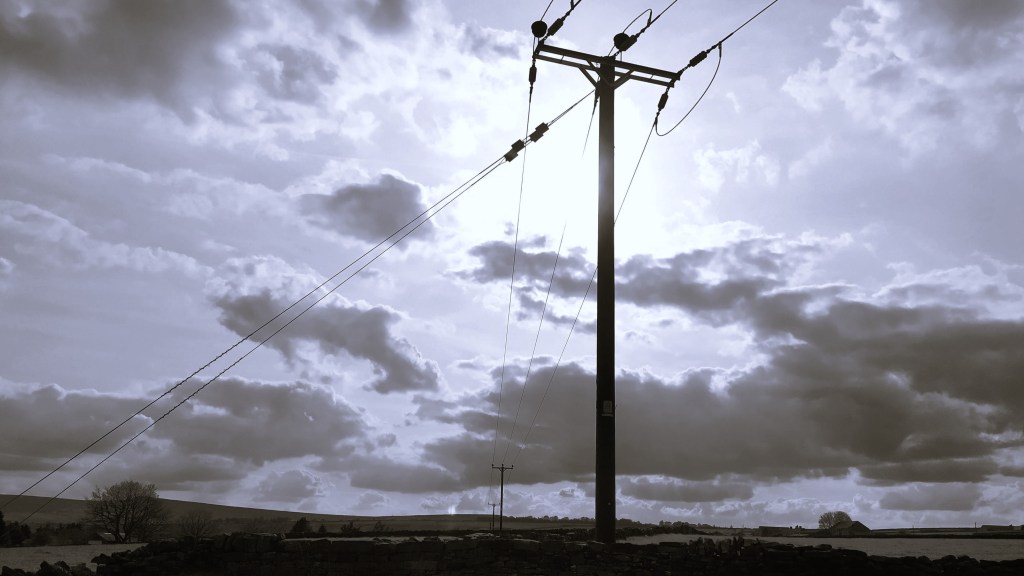
From the train, passing through a tunnel into darkness, a suspension of time and space, past and present are aligned, what will be there when I emerge? I am feeling haunted today by the shifting landscapes of who I was then, who am I now; by the act of looking back and all it entails. Constraint and freedom in this moment of travelling. Through the window, looking out; it is not about a mirror image. Spooling, filmic mind leading backwards. It begins on a train, passing through a tunnel as if returning. A series of tunnels.
Imagining the scene from the window without the advance of telegraph wires, evenly spaced and crossing it in lines. They fan out in all directions, as though human life is trying to create lines of patterns where there are none. The pylons rising at intervals are eerie. Now all I can see are these lines stretching across the hillsides and meadows, great tall spectral structures. The human presence a façade, anomalous and estranged, lying just across the surface of things. Intruders, ghostly figures who do not belong in the landscape.
The view from a train, and the landmarks of a journey. The morning an extension of my dreams. The sky is smudged out and grey, a mystery to the rooftops. I am witness to the loneliest of circumstances. The view from a train, the empty outskirts of places. The conversations she has with herself, back and forth. The person trying to pass by unnoticed.
Approaching London, and I look out to see Alexandra Palace and the rooftops of Crouch End. This is where I used to live. I used to like to walk along the streets closest to Alexandra Park, at the foot of the hill, sloping grass and the trees at its edges. Remembering that sense of dread, and always having to persuade myself to go. Being young and not wanting, not wanting to do anything. How the threads of happiness can be so tenuous.
In the white hazy cloud of a morning, I drift. The joy of forming letters on the page. If I could move this fluidly then I could always write. Closing my eyes for a moment, passing through tunnels, all my journeys blur into one movement.
2.
To another tunnel, this time near Heathrow Airport, London. It is 2005. I am on a bus, and it is beginning to grow dark outside as it enters the tunnel, as like a descent the walls close around. The red brake lights of the cars ahead, the walls of the underpass are shaped and smooth, lit orange, lights in motion, lining up and smoothly flashing by.
I know the route now, but I dread this journey in the dark of a winter evening, travelling west along the length of the Piccadilly line. I make excuses not to go. This should be reading time but always on the long tube journey out to Heathrow airport I enter the limbo between sleep and waking. The underground carriages are full of people, and it is warm. I drift into the circumvent of uneasy sleep, watching the stations pass along the line.
The bus station at Heathrow is dreary and vacant. Dark and cold, one of those places that remains unfamiliar each time you go there. There are coaches to the city, and local buses heading into the suburbs of West London. The flimsy swinging seats at the bus stop. I wait for the bus to Uxbridge, passing through the airport tunnels, looking out into the darkening sky for my stop.
The detention centre is a facility, a modern prison of convenience, austere and sanitised. Reaching its dead end, its walls, I am struck by the banality of the place, cold and barren. There is something cruel about this environment, its featureless and empty walls, its lack of care and indifferent staff, underpaid and uninspired. There I leave my things in a locker, my passport ID is checked, my fingerprints are taken. I scan a thumbprint each week to identify me.
I am a visitor. I wait to be taken through the corridors to the visiting hall. Sometimes I imagine the first arrival, or what it is like to be brought here, with no welcome, only suspicion and hostility. To wait for what will happen next, in empty surroundings at the edges of a city. London, world famous point of arrival.
At the end of my visit, I make my way to the bus stop. Now it is dark and cold, and I am trying not to think of a series of attacks on women in West London, hoping that the bus will come quickly to take me away from this desolate part of town. I am relived to reach the lights of the bus station at Heathrow, to join the tube, now emptied out, to continue with my self-analysis. I imagine the cold beer I will open at home, turning on the TV, no more reading. I am wishing for company, so I text you. It is too late now for you to come out for a drink, and it’s a Monday night. I knew it really, but I liked the idea of having something to reach hold of, of having company to pull me through the last stretches of my journey, across the sprawling city. Walking fast through bright tunnels connecting the lines of the tube, listening to the sound of my footsteps.
Part of me retains the sterile atmosphere of the detention centre. The layers of darkness uncover slowly to reveal struggle and resistance, deportations, the planes that fly by night. In the spaces of the city, in the gaps of the night, all these things are taking place at once, side by side.
It can seem bewildering, the sudden onset of night. Alone amongst strangers. In the city with the windows open and the dark falling over us, we can see our lives reflected across to other windows, as images. Lit up in windows we turn off the lights, to be visible shadows only.
3.
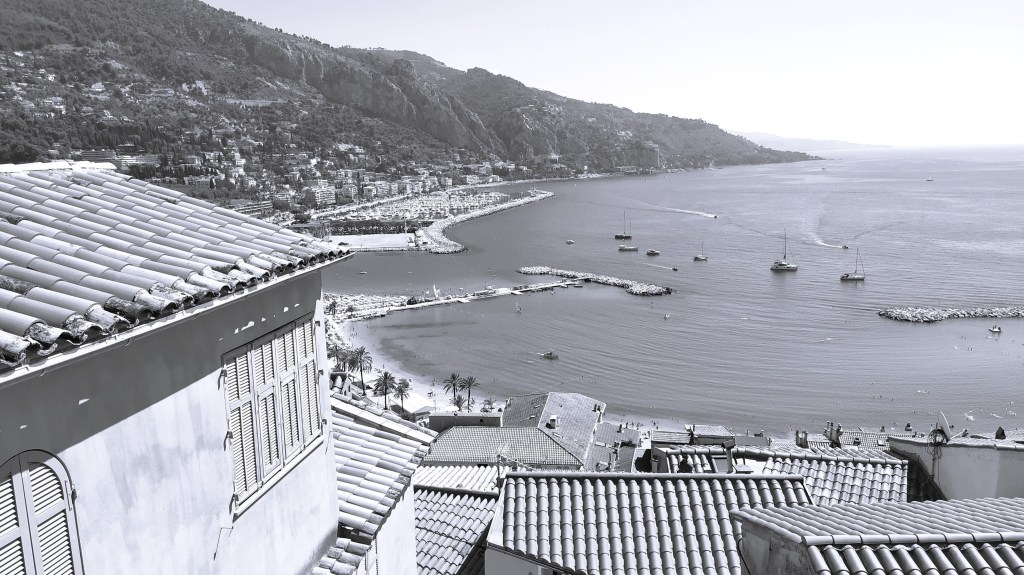
Looking back, through the pages of a notebook. It is early June 2018, from the balcony of a holiday apartment. Waking up I can open the windows to the terrace and look out to sea. I can see palm trees and the shape of the bay, the rocks and the little lighthouse, the line of the horizon and gentle blue sky. Swimming in the sea, turquoise blue, thick waves, the water strong and heavy, its texture thick somehow as though it carries real weight and strength. The trains rushing past along the Côte d’Azur.
Cloudy today. I wait for the ache, the burn of the sun on my skin. Waking early and sitting on the balcony to write, write my idea into being. To the left is the headland of Italy, to the right, Menton, dreamy with its vintage Riviera palaces and gardens. A warren of narrow streets and steps, medieval villages perch on hilltops looking down. The apartment overlooks the train tracks, and at intervals a bell rings to indicate a train passing.
Menton has become a border town, a frontier in the daily battles to keep illegal immigrants out of France, though you would hardly know this. For visitors to the coast, life continues. Except for an increased police presence at the train stations, where vans arrive with regularity to check each train. From Ventimiglia station each day they try again to make the crossing. Perhaps this time they will make it through. There is an unreality to these ceaseless travels, always departing but never arriving, neither here nor there, with no journey’s end.
I wait by the automated train signal, waiting for the bell to ring, the gates to close, and the train to come rushing by, back and forth along the coast to Italy.
Each day police wait in vans at the station closest to the Italian border and when the train arrives, they line up on the platform and enter each carriage, prise open the toilet doors. Targeting those known or suspected to be undocumented asylum seekers, or those with worn clothes, continuing the journey northwards. To detain these passengers and take them back across the border to Italy.
I walk to the border, 500m away. There are soldiers and police stationed there. I walk across to Italy and take a photograph, and then walk back. I don’t need papers. I can cross this invisible line unchallenged as many times as I wish, this line which demarcates two countries.
I can’t shake the image of a mother and her small son in the back of the police van looking out, watching as though blank to their fate. I wonder if freedom must always contingent on someone else’s loss of freedom, on the confinement of others.
4.
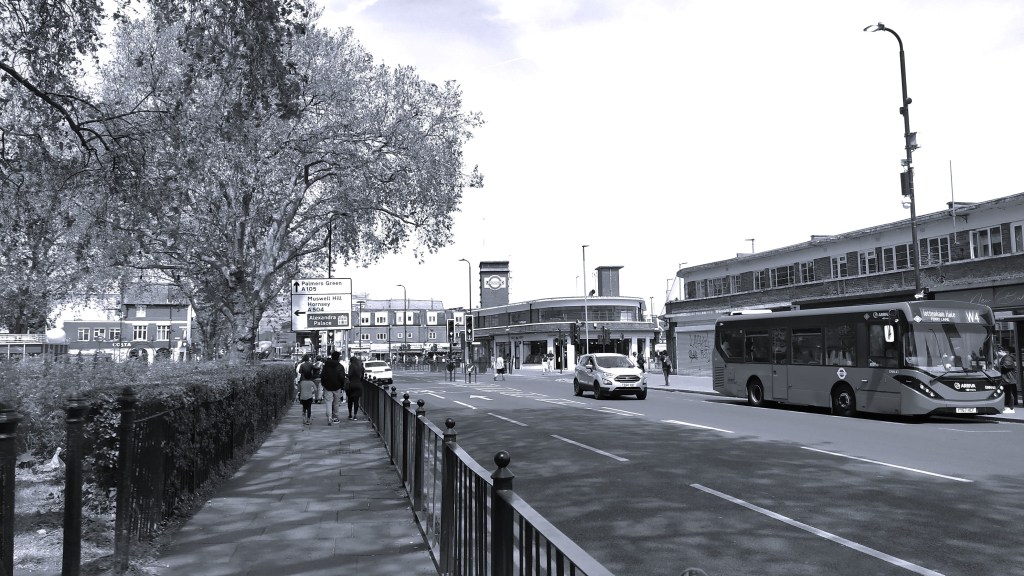
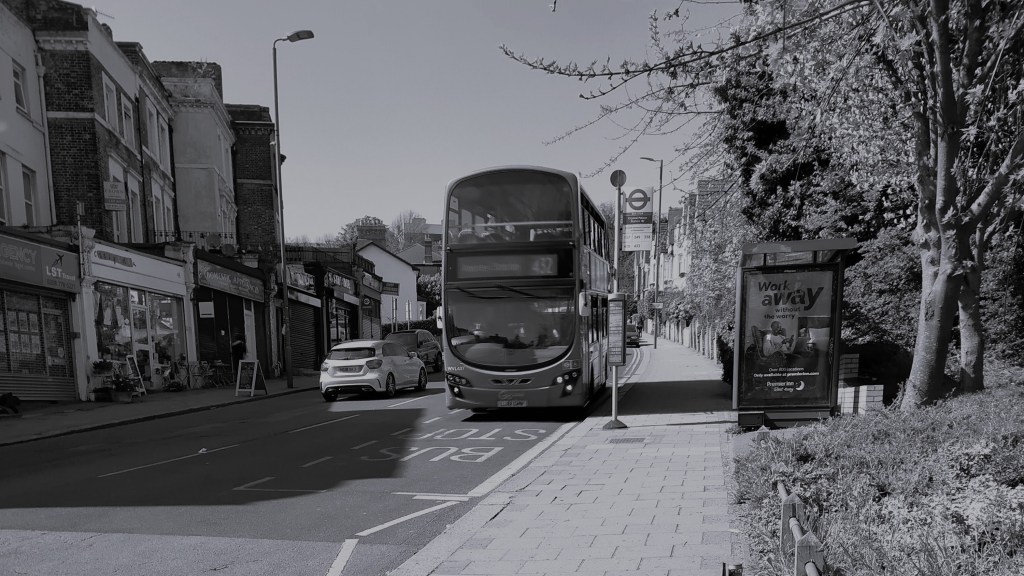
I was always on journeys then. From the windows of a bus, watching London trail past, frustratingly slow. The buses I spent so many hours on. Long journeys in distance and traffic. I liked the sense of the city that could be gained from long twisting journeys made overground, always sitting on the upper deck and preferably at the front of the bus. In the morning, late for work, or travelling home; counting the milestones, the never-ending roads between destinations. An understanding of the city from ground level, from the top deck of a bus; its endless suburbs and outskirts. To Crouch End, climbing over the hill with the city behind. I work a series of jobs in pubs in the evenings. Later I find a job in a bookstore in Islington.
On my day off, I would sit on the chaise longue in our rented flat with my little cat and read books until I drifted into sleep. Then go for a walk, crossing the road, up towards the woods, around the streets towards Highgate and back. Or I would plan a trip to one of the central London cinemas, to a matinee, and wander around Soho or Bloomsbury, enjoying the sense of disconnection, seeking something in the spun out feeling afterwards, the sensory elements of the streets, deciding on a route home.
Moving to London I am fascinated by the way the city joins together, pulls apart. After work one day I find a bar in Islington, near Highbury Corner. I have started to enjoy the feeling of going for a drink alone, stretching out into independence. I sit on a stool at the bar to draft a personal statement for my application to a course in migration studies; to put into concrete words what I have been thinking about since coming to London. To map what movement means to me. Sentences come together with a clarity that surprises me. As I sit there, near the entrance, the city lies just outside. Passing me by in the flow of traffic and of people, the change in feeling that comes from twilight.
I start to volunteer for an organisation assisting immigration detainees. I go to the office one day a week and answer the phone in the quiet office, the voices disconnected, desperate. There I absorb facts, information. I learn that for some countries there is no movement. That there are countries that won’t take people back once they have left, that there is little hope for most of these cases and no outcome either, no resolution.
I begin to cross the city, searching. The buses in London are a space to think or await the passing of time; lost in thought in the dreary never-ending scenery of the streets. A lost space and time that connects me with other journeys. To every journey with its sense of powerlessness and waiting.
5.
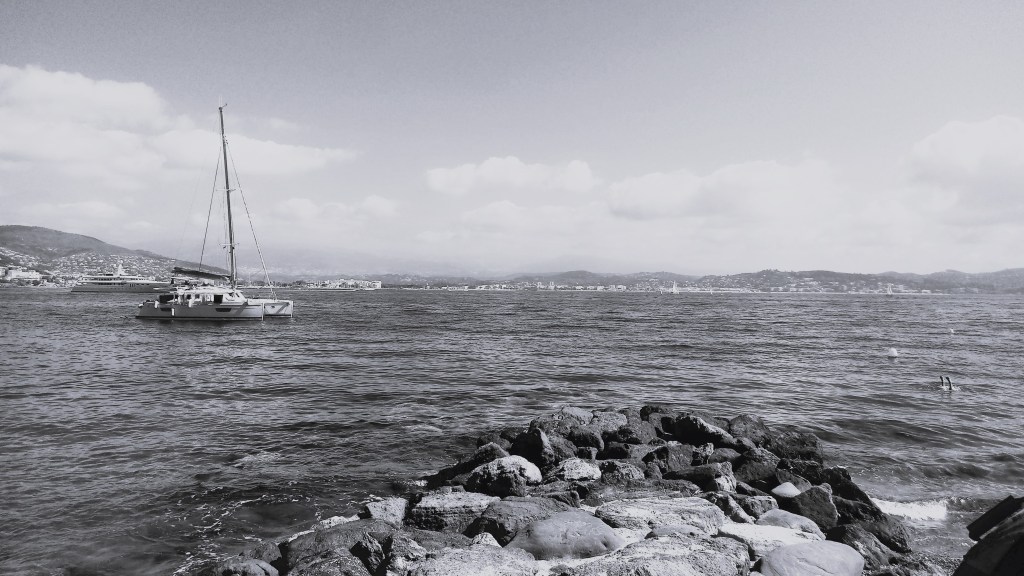
From the window of a moving bus travelling from Athens to the port of Piraeus, where boats depart for the islands. It is 2015. An impression of colour from countless tents that line the side of the road, and concrete blocks of makeshift housing. I was looking around the port for the lines of unhappy people I had seen in the news reports. Lines of people waiting for a passage across.
All these journeys that parallel the many legitimate voyages across the same seas, the ones that take place safely and uneventfully each day. Crossing the border by ocean in tiny rafts and dinghies, the desperate plunge into water, the drift, and the fear. There is no safe passage, and papers, identifies, names, ages, are as unreliable as the treacherous water below. Keep me from peril on the sea.
From deck, in the slipstream, there are shadows waiting. The line drawn between my route and theirs is as tenuous, is as fickle, as the ripples of light across the surface of the water to the blue depths of the Mediterranean. Far out to sea, its calm surface darkly cast, glinting in perilous ways.
I am thinking, why should anyone drown at sea, when a safe route is possible, when a safe route runs alongside?
6.
In the visiting room we sit and talk, but what do we talk about? It is hard to imagine you there all the time, living day after day, month after month – no time alone, no personal space, no escape. I still remember the way you speak, carefully turning the words over and translating them into English. You have already been in the country for eight years when you are stopped one morning before work. The news on your case seems long, drawn out, protracted. You are here because you didn’t seek asylum on arrival, because you come from a country that is deemed safe. Being detained for so long with no idea of the duration, no end to your sentence, removes your sense of hope.
In passing moments, I can almost remember how it felt in those days of irresolute freedom. I can almost capture it in words before the frame erases. All the trouble and anxiety and fun. Waiting at the bus stop, I think of streets stretching outwards and onwards in all directions for miles, without any seeming ending. Labyrinthine and enclosed. Closing the door behind me and walking out into the street at dusk I pause. Just there, in that pause, for a moment I can sense the city and its people all around. In those moments in-between, in the travelling time.
London is where I begin to see the world writ large. The way I lived the city, a space for wandering and enacting my inner chaos. Exploring what would become, after all, my theme. The place I came to think about movement, and to frame an addiction. To fading out, to leaving no mark, to feeling temporary. To the way the shadow falls in a moment. Uncertainty. I wanted it and I also wanted to be free of it. Thinking that something would come along, that I would find the thing I was meant to do. Live a real life. Establish myself in the city, perhaps make some money. I wanted to connect, to fit, to become substantial; to be someone, a person of substance. I didn’t want to be stuck on buses, always watching the world pass me by like a tableau, frame by frame.
Passing through the same places and tracing the thought process, the triggers of memories and ideas. There is the hospital where you worked for years as a porter. I didn’t ask you your story, but you told me in pieces, in glimpses. About the day you were caught without papers, unlucky, the day your life changed. The kind of morning you tread through slowly, trying to see what might be different.
London, the world in one city. Your view of the city is different to mine. I never have to prove who I am, what I am doing here. A parallelogram has equal sides that never meet.
7.
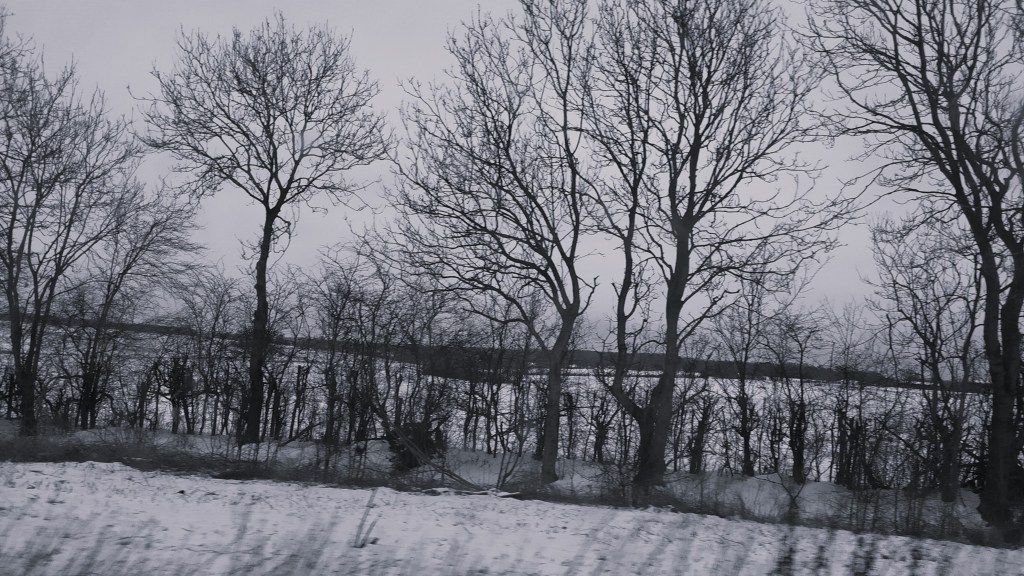
Even in this far-flung world it seems there are things that only I see. Travelling in the dim light of the morning, a winter morning, the kind of morning in which the dampness settles into your bones and turns your stomach over with the dread of it. It is cold on the coach, condensation on the windows, and the cold makes me drowsy with sleep, so I put my coat across my legs to stay warm. From the window, almost hidden from view I see a car. The car has left the road, driven into the trees and sits concealed. The coach speeds on and it is as if it were never there, but I can’t shake off the image of the car disappearing into the verges, wheels spinning. They say new species are still being recorded in some parts of the world, but some will go extinct before they are even discovered. The nameless, the unnamed. What is it to them that they have no name?
One day a week I travel to my literature course. We are reading a book that records these little slippages away from reality, like sleights of hand, tricks of the mind. The things that threaten to take you into the alternate reality, the one that lies just next to the surface of this one. They are becoming too many to handle.
After the class I make my way to the library, sitting by the window so I can look out across the wintery fields. There is a fuzzy web of tiredness mingled with the mist outside, making it hard to think clearly and focus on the chapter I am reading. Instead, I wander the shelves, scanning the titles of the books, looking for a sign that I belong there.
In the bathroom I look in the mirror. I trace the progress of the lines under my eyes, the ones across my forehead and at the bridge of my nose, their lengthening and how one line now crosses into another. Waiting for a meeting with my supervisor, who holds the pages in her hands. ‘There are some good ideas here, although it’s a bit raw … The writing feels stilted somehow, as if you were holding back.’ Stilted – yes, I am holding back.
On the journey back the winter trees give me space to breathe. The winter sky is beautiful as it speeds past, some of the horizons seem endless. I am too tired to read. There is nothing to do but to watch the setting sun, the darkening skies. Drifting off I dream of lines of trees across the sky. The way the branches look, black and twisted along the horizon like a painting. The clouds are racing along now, as they do sometimes, and I can hear them like a distant roar, galloping relentlessly. They must have fallen behind and are trying to catch up. The wind chasing them into line, racing to fill the breeches in time before they open too wide and it’s too late to make it back.
8.
The donations of warm winter clothes pile up in the reception area of my work, ready to be taken, to be transported to the camp at Calais. The clothes are not hidden away or concealed. They are sorted and driven across borders lighter than air, across the invisible lines. The clothes move more freely than the bodies they are intended for.
Sometimes the night is heavy and oppressive, like an immense cloak, and it is hard to breathe. There in the stillness, completely alone and forgotten by whoever should be watching over. It can be bewildering. What are we doing here, abandoned in this empty place?
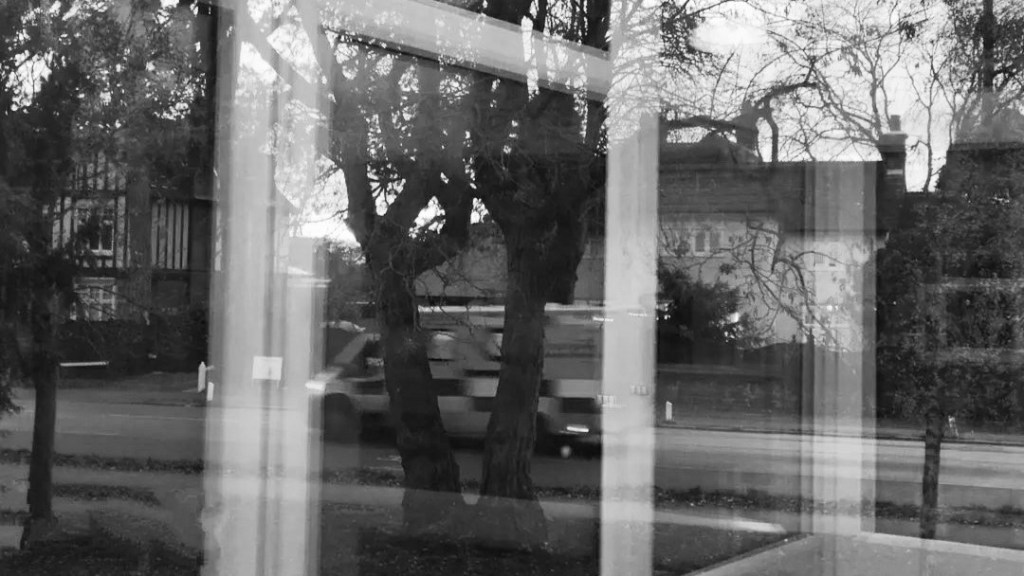
In the greyed-out light, waiting for the dawn, journeys blur across my eyes. There in the tumble-down feeling of night thoughts. By the window with the street outside, I know the lights the silent ambulance makes, lifting and falling, as it speeds past in the night.
Countless newspaper reports and statistics. In the early hours waiting for the light to come, I lie and wonder what happened to all the missing, the unaccounted for. What happened on their journey, while they waited, while they slept?
9.
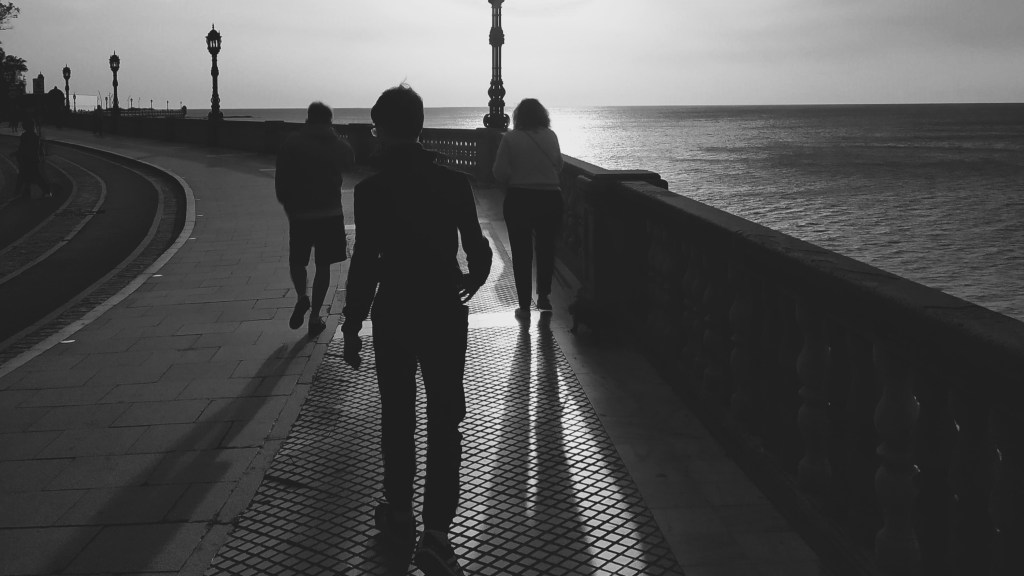
We never meet when you are released, at long last. I never learn how you made your adjustment to freedom, where you lived in the city, what happened next. The photograph of you with your children, your family, of a life continuing.
10.
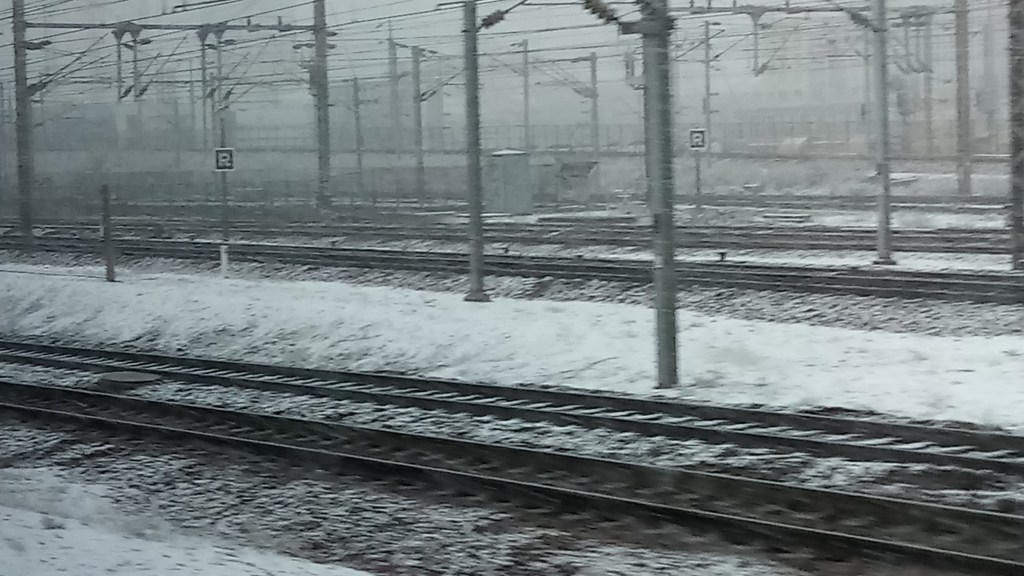
Through the spectre of the tunnel are fragments of journeys. I am on the train to Paris, passing through Eurotunnel border country, the train flying through bare and patchy fenced in ground. Arriving in Paris, to the outskirts of the city and the Gard du Nord; city of transients, a place of arrivals and departures. By the Canal Saint Martin, the tents collect in colours; in makeshift encampments that are broken apart systematically.
At the edges of Europe’s cities and its borders, the homeless of the world find shelter in tents. Camps are built and demolished, then built up again. The camps are tangible proof of what is happening, of real bodies in motion, in stasis. Of shelter and of what is left behind; collections of the items that seem to make us human. There is a strange permanence and a desolate sadness to these shelters, to the objects that dissolve with the solidity of all things, more real sometimes than those figures who inhabit them.
All my journeys pass me by in glimpses. In countless news reports. As I write this, small boats cast out across the channel from France. As fragile as the papers people mark themselves out with. They arrive on the beaches of England, to be rescued and turned away.
I walk to the places on the edges of where you are, the crossing places. All that is left then are these glimpses, caught in motion, framed on trains, waiting at the side of the road. It is in the hours of the night that I feel as lonely as my shadows, gone but always present.
Passing through a tunnel in the darkness, to the end of the line, the line between being and nothing. The tunnel continues, and I walk to its ending.


A powerful and haunting piece.
LikeLike
Thank you so much for reading – it means a lot.
LikeLiked by 1 person