Echtrai: landscapes lost, abandoned, forgotten, mythic, July 2023 (Summer)
I find myself tracking the railway line that crosses the perimeters of Paris at its different points of emerging. La Petite Ceinture, the abandoned track that circles the city. The railway that once carried passengers and connected stations, before turning obsolete and falling into disuse. Glimpses of the line appear at its periphery in different quarters of the city, in different states of wildness and abandonment.
Some places feel familiar, as if they have a life of their own, that can’t be touched. It is something that can be found in places that are only semi-wild. That once were built, and eventually were left to return to a halfway state. A predilection for ruins. A space carved out below, waiting to be imagined. A narrow passage through, encircling a city that has long spread out beyond its boundaries. Something remains, as if to tell another story, while the city surrounds and continues at its edges.
Trees lean over and bend into this space, to claim it, to move closer to the green leaves that have started to submerge the tracks. While the line continues, following its course, where there are no longer stops or stations. A disappearing circle. Destination unknown. Unspooling onwards in ladder lines, as if undaunted. Running alongside the city, lost and found in all its iterations.
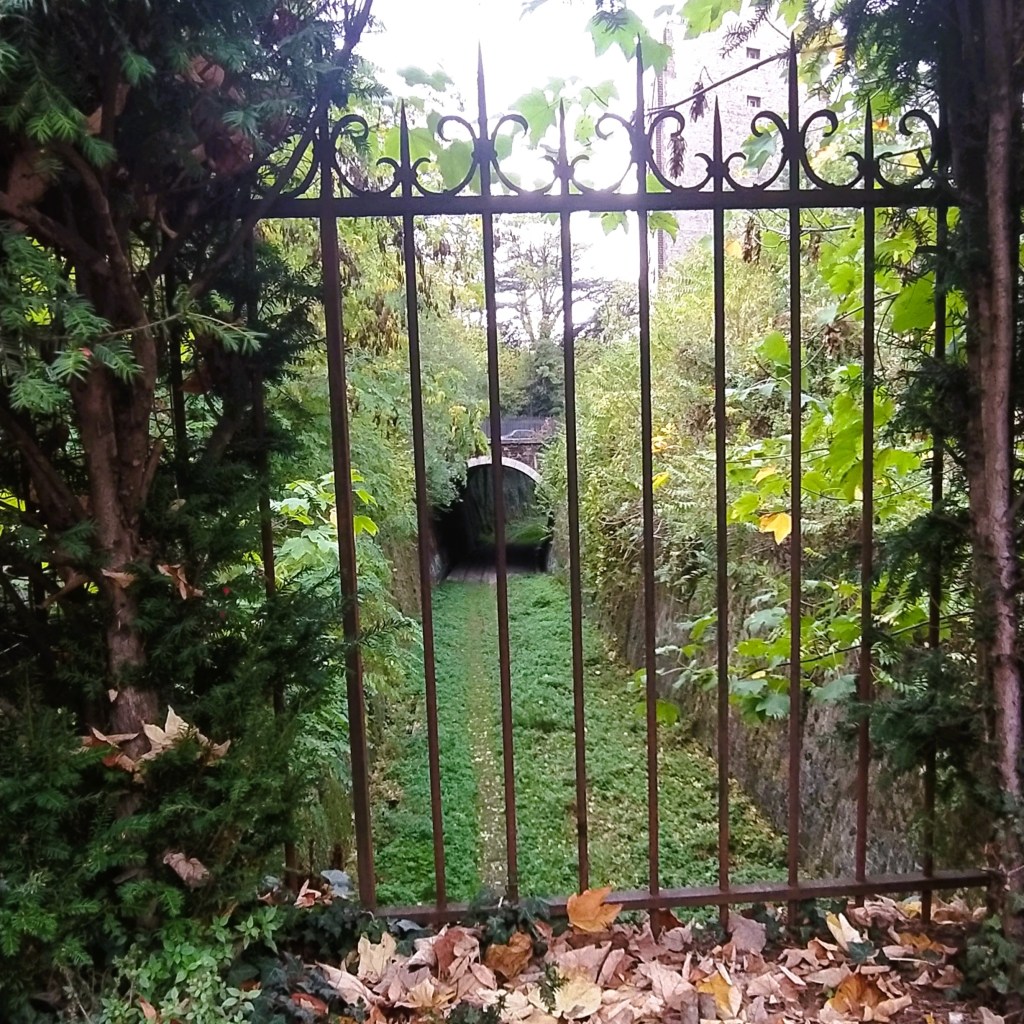
Walking through the thirteenth arrondissement, near the Parc Montsouris, I catch my first glimpse. Looking down from the road through a gap in the railings, an opening that frames a section of the railway line. The iron railings with their decorated curves and spikes, the leaves that gather at the edges. I feel a deep sense of excitement and unease. The track overgrown and partially concealed bending towards a bridge under which the line passes, turning a corner and out of sight. A wire fence stretches across my view. My camera blurs to play with perspective.
The iron girders that mark the edge of the track stand out distinct, almost untouched, not concealed or covered over. At the edges, thick patterns of leaves and foliage in different textures and tangles of branches. The trees, with their green and yellow leaves in fronds, look gentle and ethereal as they spread out towards the sky, mingling with the light, opening outwards slightly to reveal the tracks.
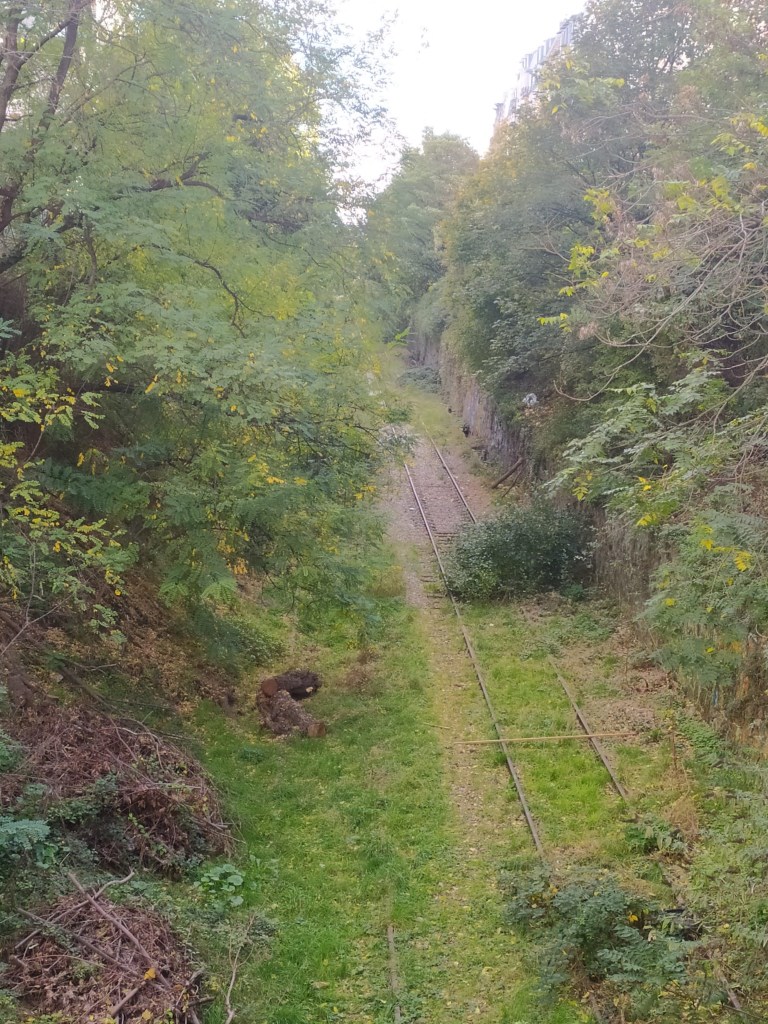
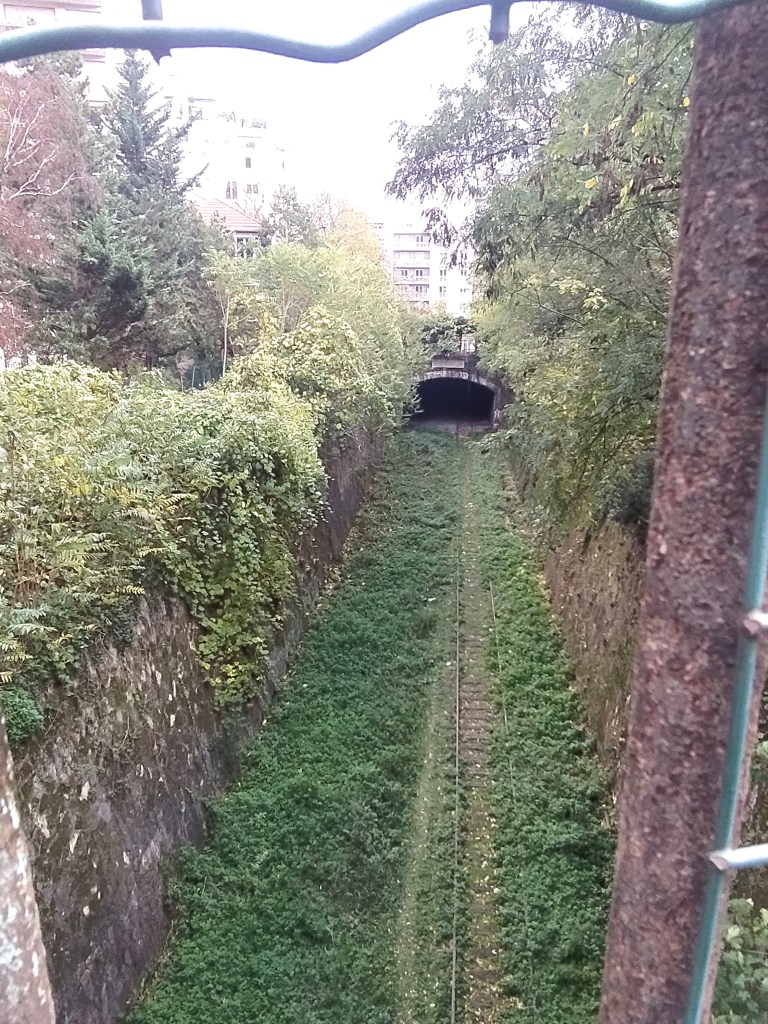
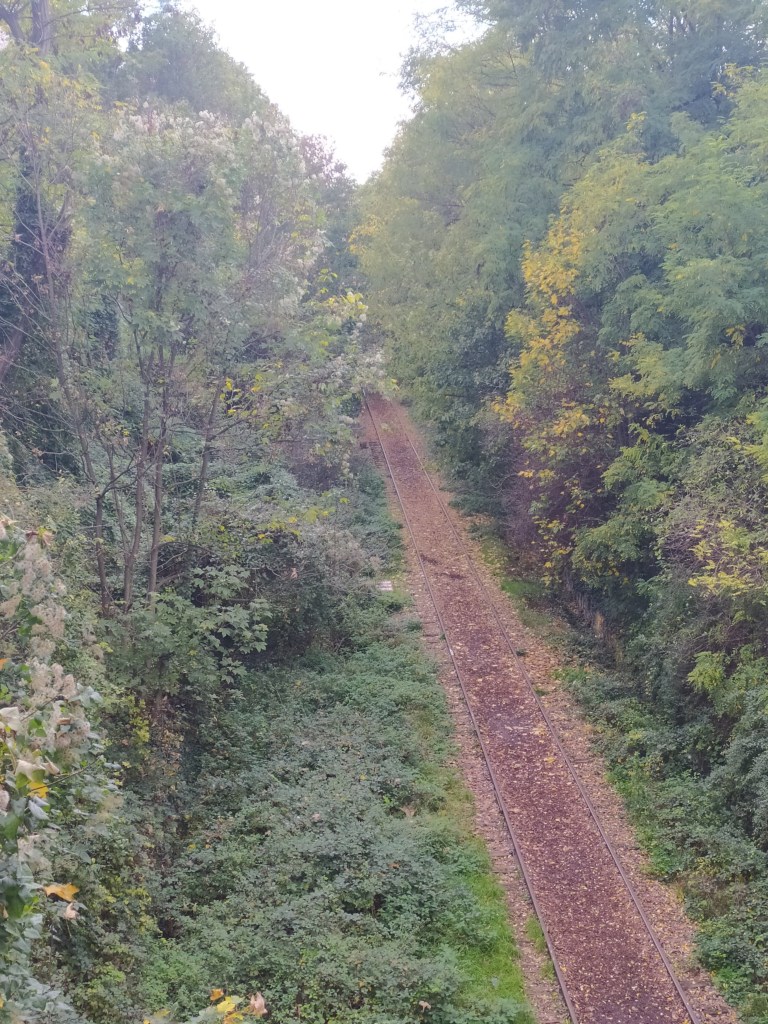
Different points of emergence, in glimpses. Some stretches of the track are open, others blocked off so that to walk them would feel like a trespass. In some sections, allotments and shared city gardens lie along the platform edge. Signs of cultivation among the wildness, and the blurring of boundaries. The edges of the lost railway are being claimed as space for city dwellers, without too much alteration or development, without infringing on its apartness too much. It is not an absence of human life for the city remains present, overlooking each stretch of track, and restricting the space into a thin corridor of wildness, that left tracks and tunnels and bridges fenced off just below its surface.
A sign saying access is forbidden. I look for the entrance and find steps leading downwards but closed off. It feels secretive and concealed, like making an underground discovery. The steps lead down to a platform at the end of a tunnel, a space decorated with vivid street art. There is nobody down there, but these points of emergence feel exposed. Once down below, that sense of being overlooked. There is only one path, one way to go. To walk the tracks is to be followed, to meet the unknown ahead.
In the distance lies the shape of another dark bridge, its mouth gaping black. The start of a tunnel, where the track winds on just beyond the next corner, turning out of view. The tunnel entrance feels desolate and empty, devoid of plants and trees, just a hint of graffiti at its edges. An unknown space beckoning, the tracks exposed and the dark spaces at the edges of the tunnel. There is no sense of where the tunnel goes or where its end is. It is as though the track comes to a stop at its entrance. As I write, I encounter the fear of what lies unseen, just beyond, waiting to be discovered. A blank page, a full stop. If I could cross into that space, would I be submerged into darkness? What happens in the places that are obscured?
I feel I am just at the beginning of something, following the line that disappears and emerges, in an interrupted circle. Looking down through iron railings worn by time, into the shadows of walls and the tunnels that continue just below the streets of the city. The tracks reveal my susceptibility to shadows and the half-light. I recall the sense of desolation and forlorn abandonment that resonate from these stretches of track, located just below the surface of the everyday, and visible only in some places, carrying on unseen. The lonely track winding onwards, a sense of apartness.
These liminal places create a sense of the uncanny that comes from knowing somewhere, and the limits to that knowing. Of seeing the strange and the unfamiliar, or the familiar in the unknown, as if I have been here before.
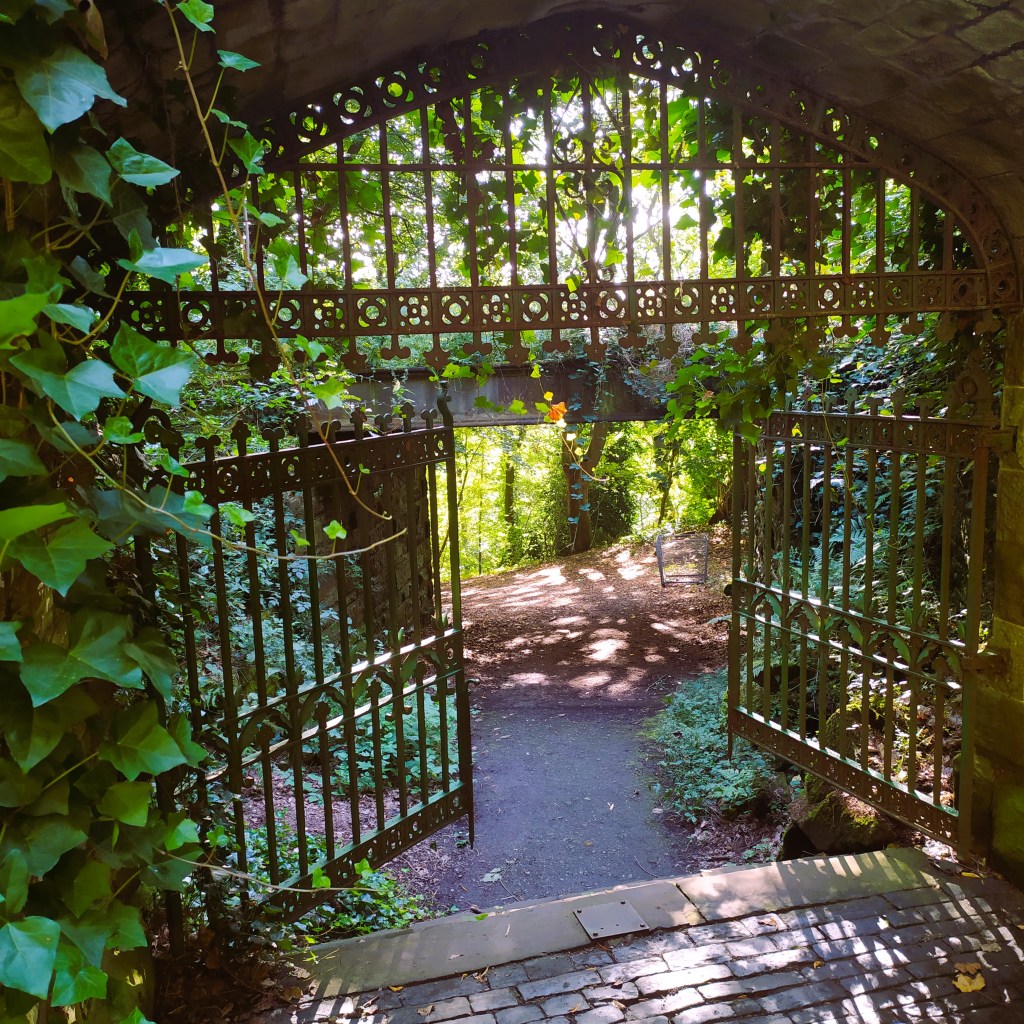
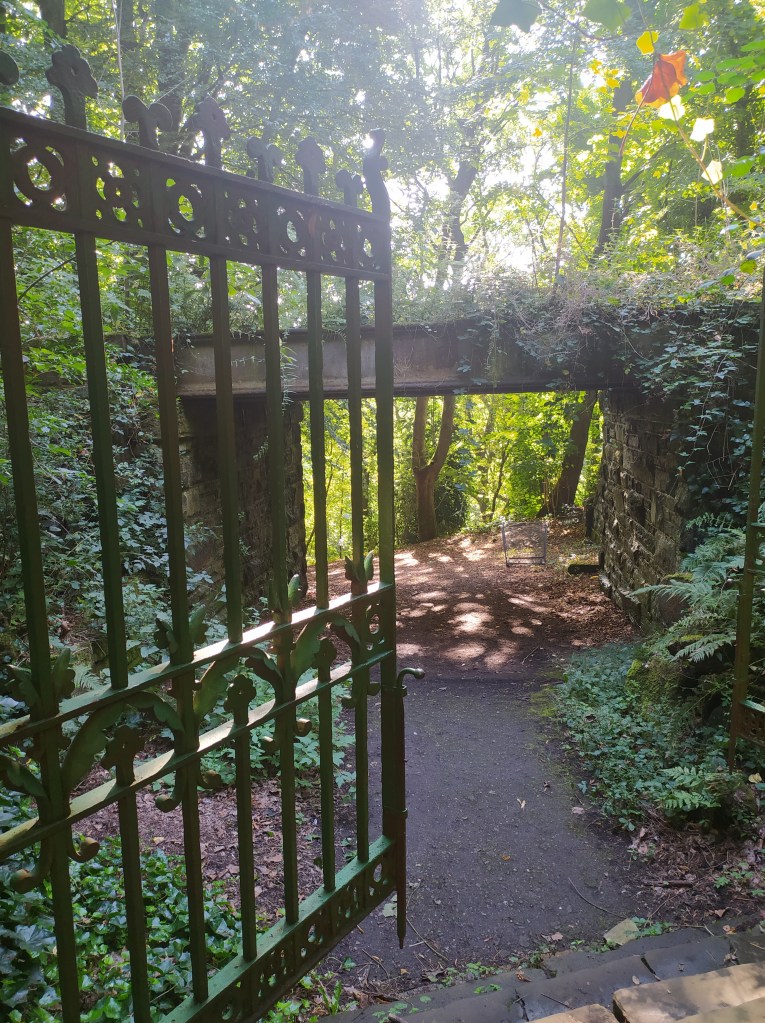
I begin following railway lines because I have been thinking about the disused railway track that ran through the deepest edges of the park in the town where I grew up. Steep banks obscured by trees. The entrance to the park, and the dark green railings running alongside the road, that create a feeling of motion, of dreaming.
I visit the park, a place I used to spend so many hours, down the road from my childhood home; I am relieved to find it has retained a certain wildness. Starting at the bottom of the park and looking out across the valley, thick clouds, dense trees. Everything in this town seems to be built over steep hills and sudden descents, that take you away from where you thought you were, disappearing into valleys. Disorientation, so that you think there are some places only trees grow. The park was constructed in such a place, higher ground suspended across the valley. A viaduct framing the view, sometimes fading into the trees, depending on the light.
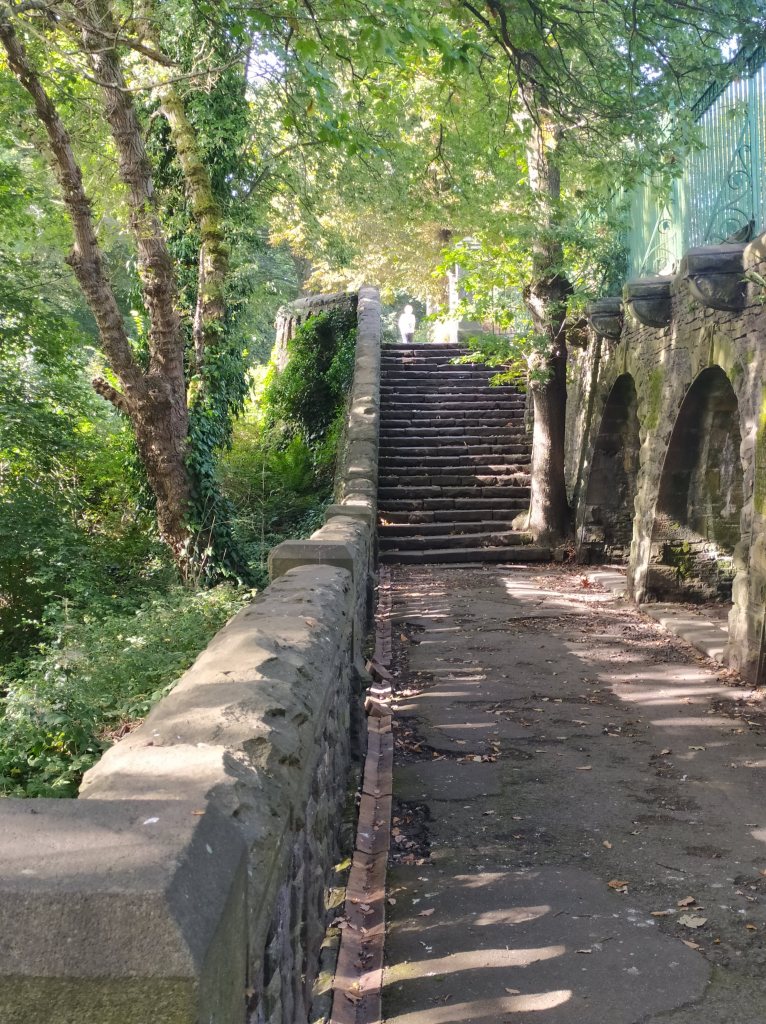
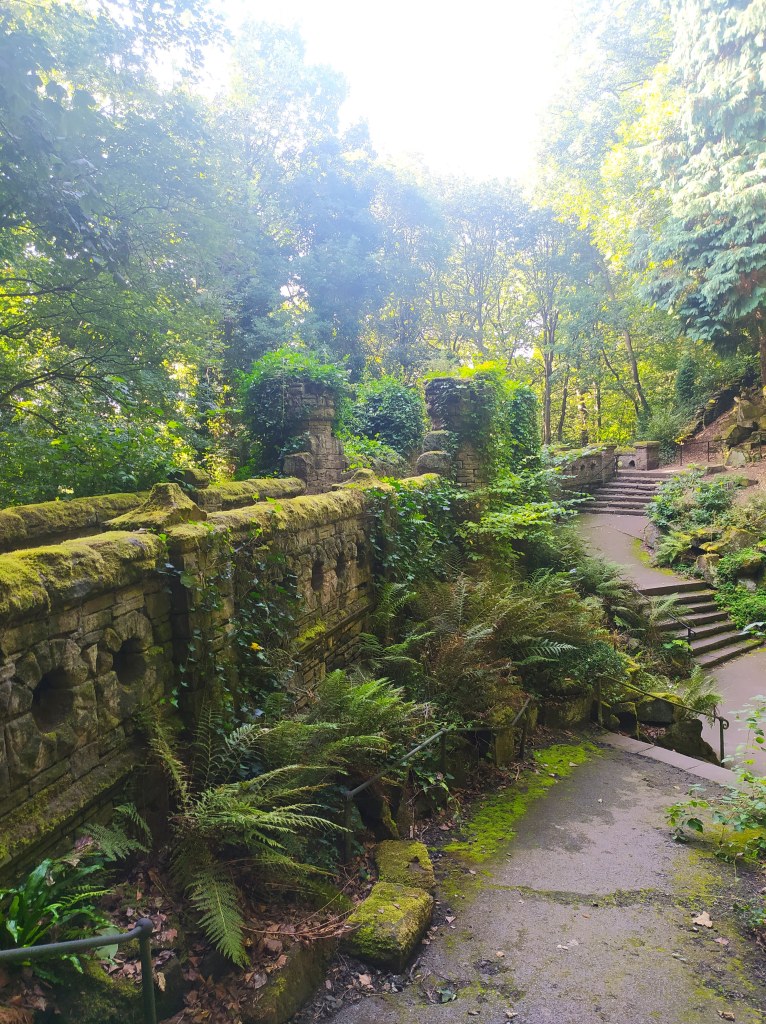
There are the old iron fences I remember, and countless rhododendrons, those rich and shiny leaves that remove light. The stairs are cracked, made from carved stone blending into their surroundings. There is something uncanny about these stairs for me, their familiar shape altered by time. Before its decline, the railway branch line brought visitors to wander the park, with its grandiose vision of castles and grottoes, cascades and fountains; a forgotten and enchanted realm, that can be traced through old photographs.
Something of the grandeur remains, and there is something faded and ghostly about these structures that were built all those years ago, standing like markers of another time. They remain in place like haunted fixtures of some ruined temple. Dark silhouettes of tree branches, barren against the still white cloud, overcast sky. In the quiet of the park, I look towards the wall of the lookout, obscured by trees and foliage. I always preferred the most ruined of castles: there was more potential for stories in these spaces that left gaps to be filled by the imagination.
I remember such quiet days. There was always the possibility to encounter desertion. Descending through the park to the old railway path always felt daring. There was a feeling of isolation, of alert sharpened senses. A palpable stillness, slightly sinister and bewitching. Looking back, paths and staircase mark out an ascent through the valley. Trees stretch outwards, expressive branches reaching out across the empty space. A scramble down steep banks concealed by leaves and vegetation to where the stone walls are layered with moss. The sky is empty, white and silent.
There are rhododendrons here, perhaps less than I recall, with their densely claustrophobic shade and tendency to conceal any spaces between the trees. I always thought the shapes and density of the leaves made things feel darker and more enclosed. I remember looking down through the quiet of the park, uncanny and deserted, the kind of memories that can surface on such a quiet day. There were so many levels and hidden places, that it was possible to imagine someone might be watching you, unobserved.
I look down into the narrow steep valley, and the line cut into it where the railway once ran. Trees bend across the path and emerge at different angles from the ridge, where I stand. Branches grow in all directions, and the roots of the trees are visible across the sloping path I follow. To one side lies the end of the railway line, a tunnel blocked off with bricks and disappearing into the valley, its exact course unknown. To the other side the cemetery and beyond that the road towards the village of Meltham, the destination of the branch line.
Here I can see only trees. I imagine the valley before the park was built, untouched, in this area known as Dungeon Woods, named perhaps for the oppressive nature of the wood. The darkness of the trees that seem to grow together closely. These are places where the human world seems to leave no impact, where things happen unobserved. The branches of trees and the texture of stone. The ground itself seems layered with black mud and leaves. The woodland floor feels thickly covered, as if you might sink deeper into the leaves with each step downwards. There are unknown rustlings and places to fall, to sink under. It is as if I could get lost there. It feels sinister today, perhaps even wilder than it used to. Everything is one grey-green colour, of woodland becoming blacker. The silhouettes of trees hang over the space left by the sky. Long trunks and branches bend and lean across the valley, the lighter, thinner branches come together to obscure the hillside behind.
In the park, there are poems on display written by children, and I linger to read them. In one poem, I am struck by a line imagining seeing faces in the trees, and signatures in the trees. I zoom into the twisting branches, their frail outlines against the sky and begin to see the writing too. In lines and traces of what has come before. The signatures of unknown people who lived here or passed through, left as markers. Or an awareness in the trees themselves, complicit, and not just a backdrop to the tableau.
This is the end of the line. A place that feels hidden and obscure. I feel suddenly solitary. The walls built into the side of the enclosure are covered with moss and damp. It was often muddy here, the kind of mud that never seemed to dry completely, that felt black and dense and sticky as though it didn’t see much light. The ground covered over the roots of trees and buried in thick layers of debris from decomposing leaves.
I stand on the ridge and look down but feel a shiver at the idea of going closer. The blocked off entrance to the tunnel looks even more concealed than I remember, almost camouflaged now with moss and leaves. It makes me think of a deep well. All that remains is a narrow passage through. The banks on either side are submerged with leaves and trees crowd over from above, so that you can’t see the ground. The valley feels as though it is narrowing, as trees grow across and over. A narrow passage leading to a small bricked up tunnel with white paint and letters in graffiti. Piles of dry leaves ascend the sides of the banks on either side making the space feel even smaller. I wonder what is behind the bricks that block the entrance to the tunnel, after years of decline and disuse, and where it might lead.
I wonder if I should continue. I have walked here before on many occasions, but the silence today feels like going into the heart of some deep woodland place, as if the railway line has been swallowed over. I don’t remember this narrow part by the end of the tunnel that makes me hesitate to walk there. I turn around and look back the other way to see the pathway leading into the valley and curving around. The overcast day and lack of light create a sense of stillness and isolation. The banks of the steep valley are overgrown with trees. I walk along for a moment, but today it feels like entering a hidden place with no sense of when I might return or emerge, or how far along it is to reach the other end.
Walking through the valley I begin to experience a feeling of constriction, as though the pathway might close around me, to seal itself off, with no return, no way of going back. The space changing and closing inwards. The feeling of descending, like going underground. The sides of the banks narrowing to feel like a trap, surrounded, and concealing the way out, enclosed and absorbed by the leaves that lie thick upon the ground.
The quiet stillness is palpable and even in my photographs, through blurry lines of trees and branches, leaves swirl across in dreamy motion, like hallucination. I move away, zoom out, the tunnel ever vanishing, present but more obscure than ever. I turn around and look back. There is only the bricked-up tunnel one way, or the steep and narrowing valley the other. In that moment, a conflicting urge to turn back, to run away from the enclosed space, or to plunge onwards along the path to its ending. Swallowed up by leaves and branches, with no way out.
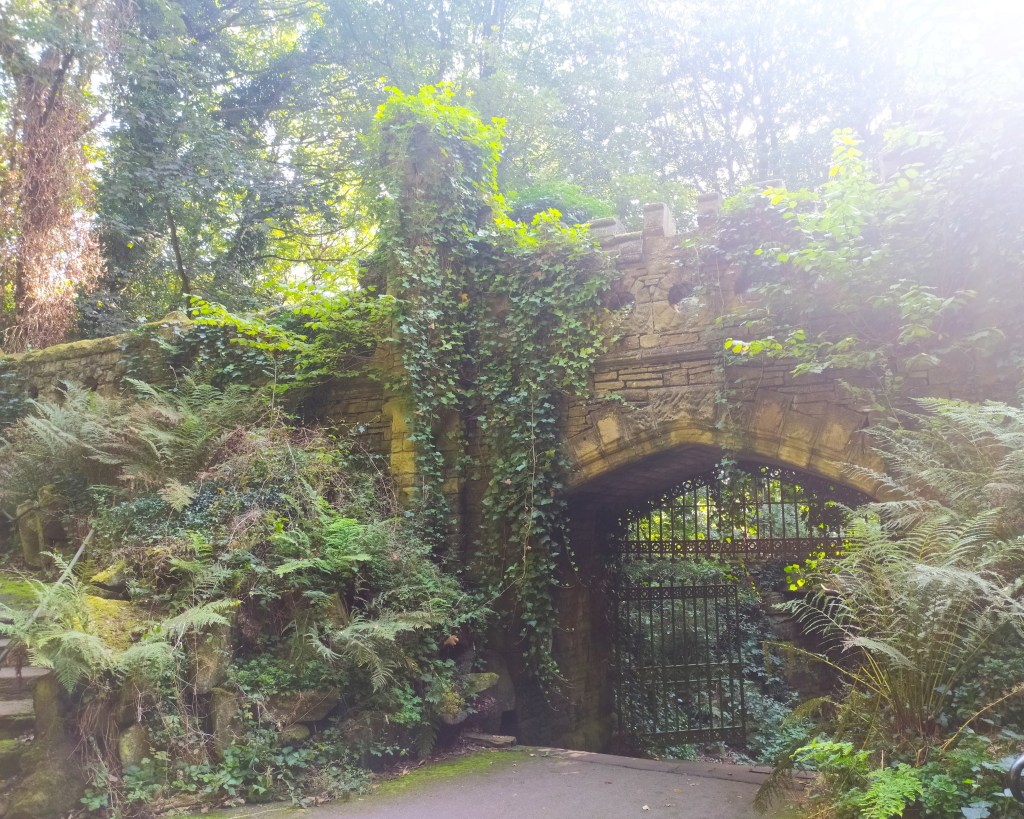
Some places have the meaning of a dreamscape, as though I walk here at night alone where no one else sees me. Conjured images of being there melt into one seamless image. The track leading onwards, concealed by twilight. The path I follow, descending into shadows, like stumbling upon the places of a dream.
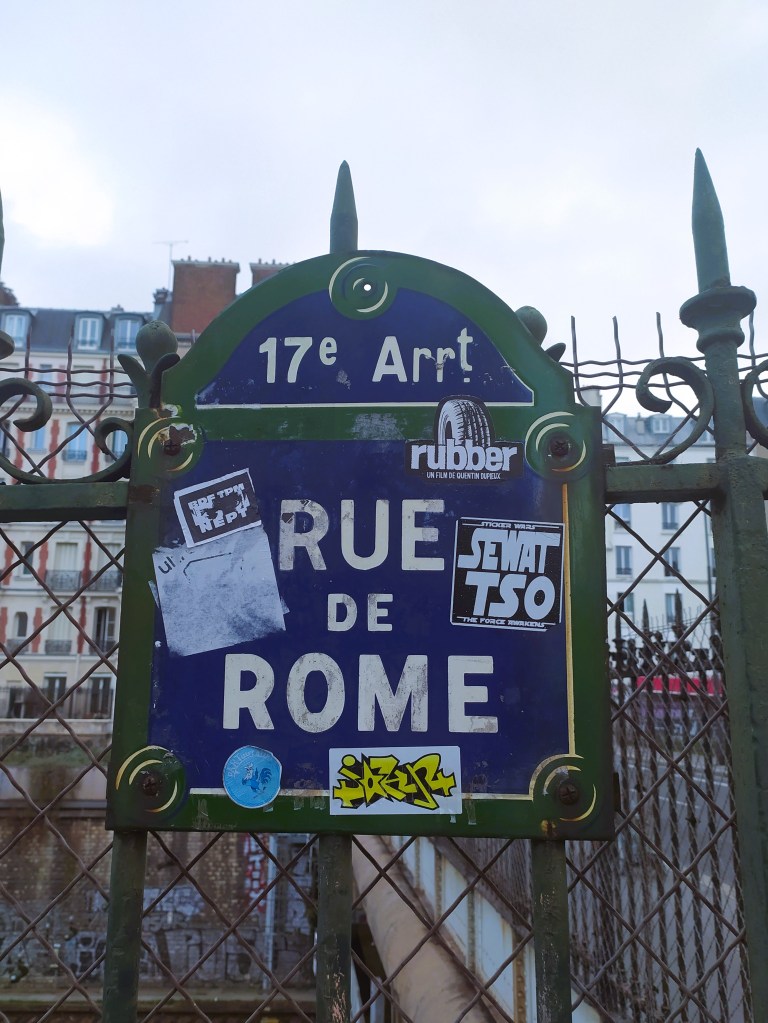
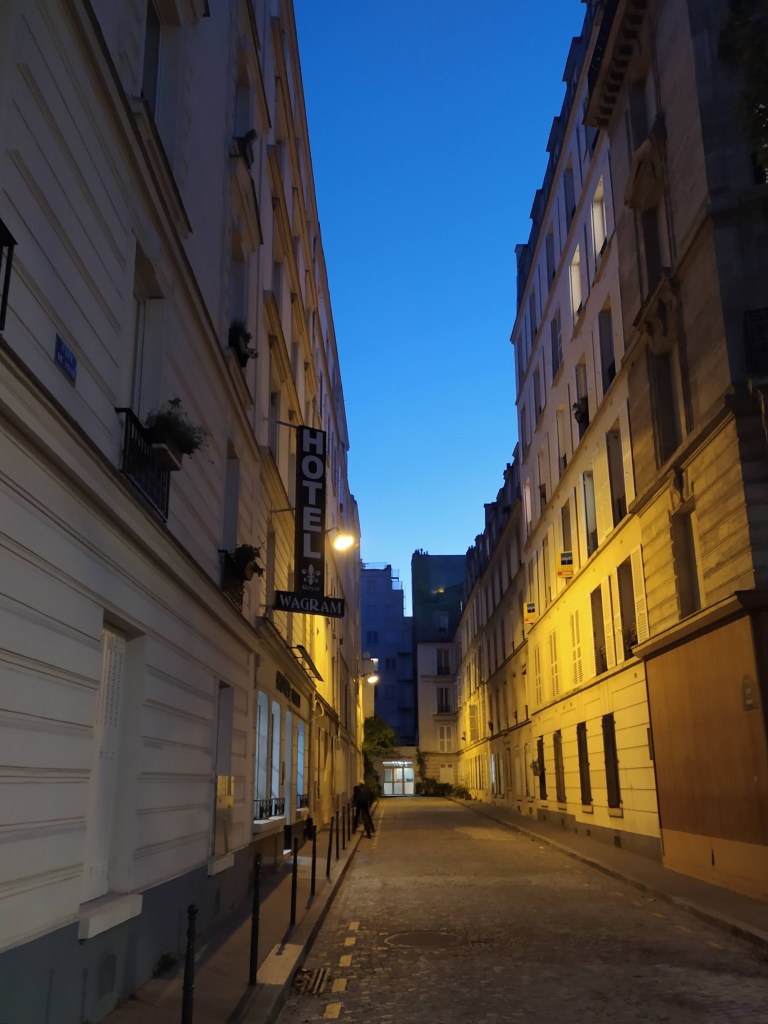
A walk along the rue de Rome at dusk, a wide expanse of train tracks glimpsed through the wire fencing. I find the street name so evocative, and the change of light seems the perfect time to get a sense of this place, passing alongside the tracks, the sky opening wide, the streets fanning outwards. I walk along lively Parisian streets as people are returning from work and making their way home or stopping for a drink and to meet in cafes. Trees and the façades of apartments fold into the falling light of evening. At this hour, the buildings are illuminated, and their windows are lit up. A mysterious shadow begins to fall over all these passages and hotel signs, the blue of the slowly darkening sky contrasts with the yellow light falling on the white of the walls. Here a figure stumbles along, adding footsteps to my story, adding doorways and the entrances to buildings.
The elegant shapes of the buildings, shapely lit windows, iron balconies and carved stone, shadowed by trees, the shapes of people walking, encode the evening time. The lights which banish the night or distance it, make these concealed spaces appear more mysterious. The loss of light seems to speed up at this time, or to happen imperceptibly, so that suddenly the evening feels shrouded in it: the mystery at the heart of every cycle of time. The folding of darkness, covering and concealing, like the tracks I follow, onwards into lost time, caught in their own circle.

Through a fence, its railings covered over and encased with wire, a view into dense foliage and trees. Through the holes in the wire fencing, I can look down and just about see the tracks. In the dark there are bright green leaves. A space carved out and almost illuminated in some places, concealed in others. The glow from apartments and restaurants on either side, from the road passing over the track, both lights up and obscures what lies below. The dark covers further these places because of the light that surrounds. A nighttime place that closes into itself, that doesn’t want to be reached.
The blue of the sky in the distance, a city view of buildings above, the foliage of hanging trees creates a haunted, ethereal glow across the tracks. The web of wire fencing conspires with the blue uncanny light that hovers over the tracks, to create a silent haunted place that maintains its presence even while being swallowed by the darkness. Hiding in plain sight. And now I sense how the city crosses into the tracks, and the tracks blend into the city.
Not a sign of life, it belongs to the trees alone. Just across from cafes and the life of the streets it lies there waiting. Is it the night or the city that creates a sense of the sinister, or the tangled web of what has gone before? There are no empty spaces, the tracks follow onwards, a part of the city but separate.
Walking back towards the rue de Rome and looking down at the tracks which are in use here. Lying adjacent, is an abandoned station, lit up and desolate, with debris and grass growing along its side. There is a sense of mystery about this road that on one side overlooks the tracks, the trains in motion, and the shadowed parts of a disused railway line. Waiting to disappear and then resurface, suggestive, in moments across the city. The city which glows above, in red and yellow misted blurry lights. Passing cars moving onwards past vacant stillness.
 The Street Walks In
I love this Anna. I love abandoned or forgotten places and you have evoked great atmosphere here.
LikeLike
Thanks Andrea, I’m glad you enjoyed it. It has been wonderful discovering your work as well – looking forward to reading more.
LikeLiked by 1 person