How long is this state of twilight, this in-between time when day begins to be covered over, when light remains, and is finally lost? Sometimes it is hard to say. It slips past as I am trying to catch the moment. I have walked across the river in the dwindling shadows of afternoon, slipping by unnoticed like the fading light, until suddenly I look around and it is darker still, changing the look of the streets like a spell cast, concealing the way I have come.
Walking
Featured
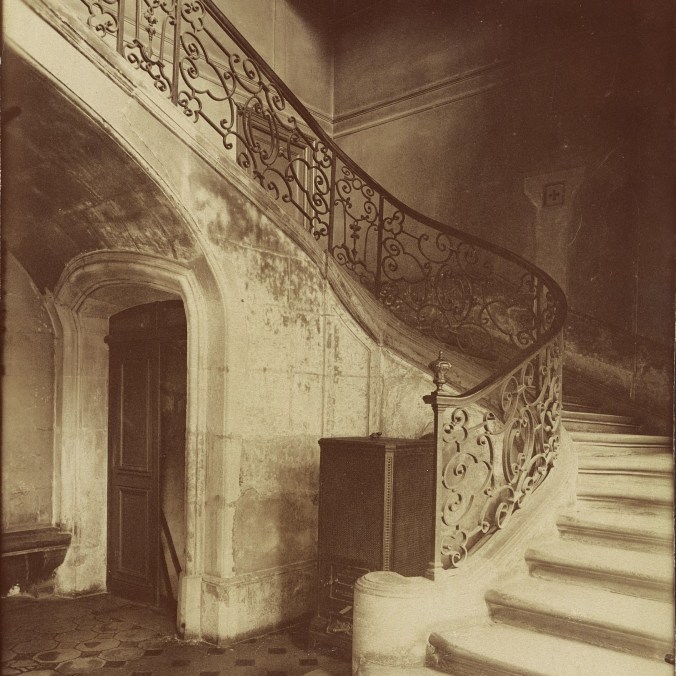
Apparition
I was looking for a hotel that was no longer there or that never existed. I found myself lost in dreams of the hotel room that still waited, at the top of the stairway, at the end of the passage. Imagining its interior, the window overlooking a courtyard. And shadows fell as I was looking.
Featured
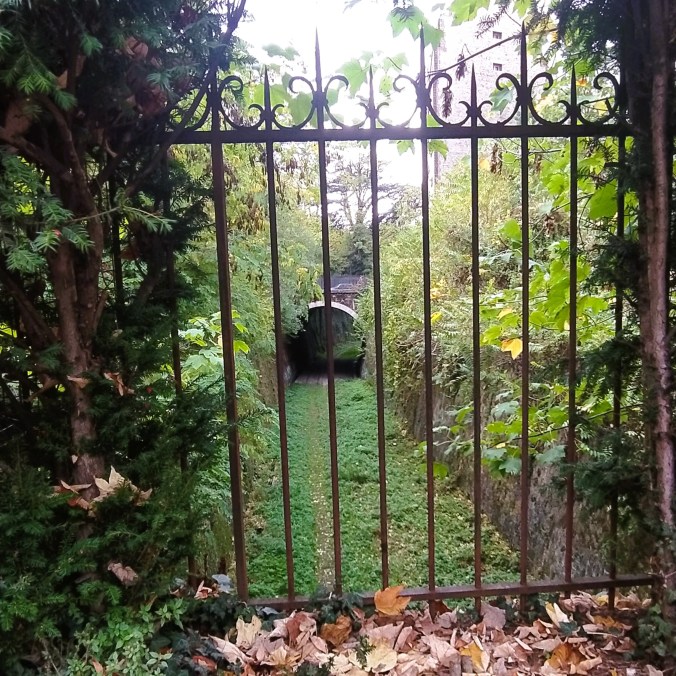
Perimeter Lines
The loss of light seems to speed up at this time, or to happen imperceptibly, so that suddenly the evening feels shrouded in it: the mystery at the heart of every cycle of time. The folding of darkness, covering and concealing, like the tracks I follow, onwards into lost time, caught in their own circle ... And now I sense how the city crosses into the tracks, and the tracks blend into the city.
Featured

Moon Rock
The ideas form slowly, one glimpse at a time. I become attuned to the contrasts. I am entranced by the light and the colours of the landscape. Although it speaks of what is absent, it is never still, always changing. The changes are slow, immeasurably slow and yet the scene around me alters with every hour, every moment, every fall of the light.
New writing published by Echtrai Journal
I begin following railway lines because I have been thinking about the disused railway track that ran through the deepest edges of the park in the town where I grew up. Steep banks obscured by trees. The entrance to the park, and the dark green railings running alongside the road, that create a feeling of motion, of dreaming.
Featured

Winter Spell: A walk through Heptonstall
The landscape leaves its marks, draws its way through my veins, like the road running through tree-lined stretches, where trees tunnel over us. This is how I remember it, etched in, and layered with buildings. The dark river, which is high at this time of year, winds through Hebden Bridge. The town is lit by lights, winter blue. In my hand a shard of ice.
Featured

In the Rue Bleue
Looking back through my points of surfacing in Quartet, a book filled with references to sites across Montmartre and Montparnasse, some of which I have visited and explored here - through streets, hotels, cafés - the different views of the city. Through these locations I have crossed into some of the imagery and ideas in the book: the bars and nightlife, the concealed and invisible populations of migrants and stateless people, the elegant façade of the grand buildings and sites of justice and respectability, the life of the back streets, their poverty and hidden places, the dark river flowing through, the city as labyrinth.
Featured

Saint Julien-le-Pauvre
On my visit, I entered the church and found myself alone. I wasn't expecting to feel the depth of emotion I felt on closing the door and standing in the interior of the church. Once inside I felt a surge of what I might describe as reverence, that made me pause and stand still. The atmosphere was dark, quiet, hushed, the sense of time standing by. Something hard to describe, a moment of breathlessness that I wanted to hold onto.
Featured

The city as labyrinth
The sense of unreality that comes from walking within an invented form, a tangle of signs and symbols, and all the time knowing that it isn’t real. The labyrinth is part of the circle of time, of finding myself back at the place I started, of living within an illusion, a figure of the imagination. The streets are not really a labyrinth, and at the same time when I look at a map, they appear circular, so that walking around and the names of the streets create a sense of repetition, like being caught in a recurring dream.
Featured

Marseille, port city: sails and sunlight
Now I follow the Rue de Rome towards the old port. Everywhere the buildings with shutters, white and pastel, as if the sun has drained and turned everything a faded white. The harbour lined with boats, their sails blue and white; in lines they point upwards, their forms definite and leaving shadow. The reflections in the water are gentle ripples which turn them back to trees, they are branches bending gently with the movement of water. There is a big wheel circling slowly and up into the blue. I take photographs into the sun to see how they are drenched by light, as though the sun has pulled all the colours out and left only reflected lights.
 The Street Walks In