How long is this state of twilight, this in-between time when day begins to be covered over, when light remains, and is finally lost? Sometimes it is hard to say. It slips past as I am trying to catch the moment. I have walked across the river in the dwindling shadows of afternoon, slipping by unnoticed like the fading light, until suddenly I look around and it is darker still, changing the look of the streets like a spell cast, concealing the way I have come.
Place
Featured
Apparition
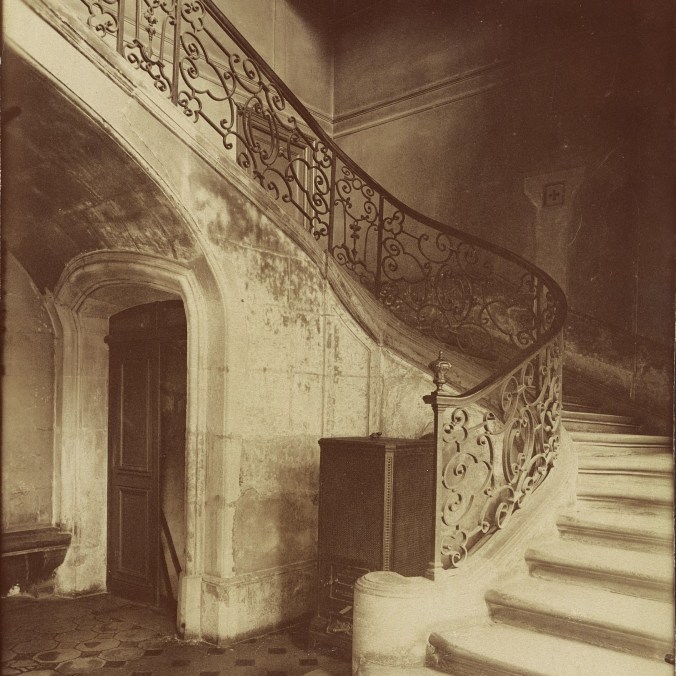
I was looking for a hotel that was no longer there or that never existed. I found myself lost in dreams of the hotel room that still waited, at the top of the stairway, at the end of the passage. Imagining its interior, the window overlooking a courtyard. And shadows fell as I was looking.
Featured
Perimeter Lines
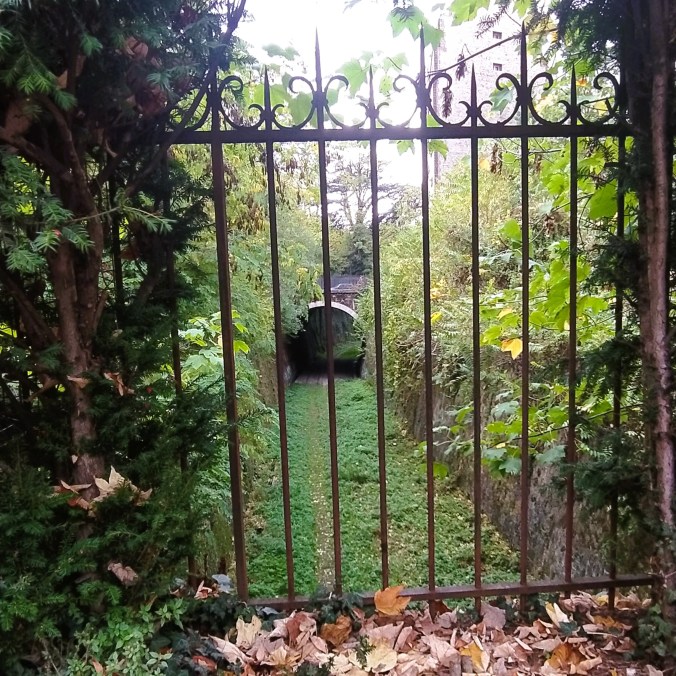
The loss of light seems to speed up at this time, or to happen imperceptibly, so that suddenly the evening feels shrouded in it: the mystery at the heart of every cycle of time. The folding of darkness, covering and concealing, like the tracks I follow, onwards into lost time, caught in their own circle ... And now I sense how the city crosses into the tracks, and the tracks blend into the city.
Featured

Moon Rock
The ideas form slowly, one glimpse at a time. I become attuned to the contrasts. I am entranced by the light and the colours of the landscape. Although it speaks of what is absent, it is never still, always changing. The changes are slow, immeasurably slow and yet the scene around me alters with every hour, every moment, every fall of the light.
New writing published by Echtrai Journal
I begin following railway lines because I have been thinking about the disused railway track that ran through the deepest edges of the park in the town where I grew up. Steep banks obscured by trees. The entrance to the park, and the dark green railings running alongside the road, that create a feeling of motion, of dreaming.
Featured

Passages: on the Rue des Thermopyles
Looking back along the cobbled lane there is a sense of green everywhere, hushed voices from the shared garden. The shade of trees and dappled sunlight, rooftops, and blue sky. Each glimpse is like framing a different fall of shadow and sunlight and sometimes the street seems to lengthen depending on the angle I look, as figures emerge and fade into the space of the passage and around corners. I want to notice every detail, to know the story behind every door.
Featured

Out of Place No.01: ‘Housekeeping’ by Marilynne Robinson
Ruthie begins to find a greater awareness of fragility, of instability and impermanence. To stay still in the book, is to be caught up in the ordered time of the domestic. It can be a way to hold the past at a distance and keep out the ghosts of those who are absent or lost. For Ruthie and Sylvie, these fragments of memory threaten to overwhelm the present, and a life of drifting become a way of comprehending the ghosts of the past, of keeping them alive through movement.
Featured

Gloomy Sunday/Sombre Dimanche
There is something powerful and haunting about listening to this song, and it has a dark and mournful melody, particularly in the earliest versions. Lyrically poetic, it also contains a sense of its time, of the dread and uncertainty that shadowed the 1930s. The legends that have attached to the song, may also be present in each listen, and it is interesting to think about how popular songs might travel and adapt over time. Even without its notoriety, there is an atmosphere of sadness evoked by the song, and something compelling, something that is hard to shake.
Featured

From an empty room
The motif of wandering, the feeling of restlessness is there in the Rodinksy book - it circles around the myth of the room and is always starting out. In the book, I like the aura of the photographs, the suppressed and concealed histories that buildings contain. It helps me to think about what is hidden and hopeless, what seems lost about my own project. How it changes and disappears before my eyes. Sinclair writes about Rachel Lichtenstein and her quest, how she is drawn to an empty space that is at once charged with energy, about what is paralyzing about her obsession, how she must 'find some resolution or lose herself forever in the attempt.'
Featured

Paper Ghosts
By the water’s edge, the monument to the immigrant, looking back at the city, looking out across the wide and muddy river. Situated at the point of arrival, the old port of New Orleans, marking the point of embarkation, the journey’s end and the start of crossings and travels, hopes and dreams. A two-sided statue, a decorated figure, like those carved on a ship’s prow looks out to the water; an immigrant family look towards the city. The crescent city lies at a bend in the Mississippi River. A city haunted by its migrants, by their comings and goings, the history of these streets and those who walked them.
 The Street Walks In