“When it comes to Bloomsbury bedsits, I know what I’m talking about”

Jean Rhys’s work portrays a series of rooms, a life composed of rooms occupied; the movement from room to room. Often in her work there is a sense of the uncanny, the unhomely, where the unfamiliar masquerades as familiar and vice versa. When I lived in London, I used to fixate on a few cheap looking hotels near Finsbury Park. They represented a kind of disengagement for me, an escape from real life. Reading Rhys, I found myself wanting to put into words, that sense of departure and of estrangement.

Fate and fatalism

Rhys heroines are fatalistic partly because their lives are precarious. They are unable to make tangible plans because the instability of their lives, and their economic and existential uncertainty, means that they live moment to moment, not knowing what might happen next. It it this living by chance that opens up to expansiveness, or closes down to disappointment and empty feelings. This creates a sense of tension, between hope and despair.

Chorus Girls vs. Landladies

Walking through the London streets, Fitzrovia and Bloomsbury, I am thinking about the significance of the marginal figures Rhys writes about, her chorus girls and landladies. There is something radical going on in her portrayals of characters who wouldn't usually form the focus of literary fiction. She re-writes the script through these marginal characters, and they make a trajectory through all her novels.

It began to grow cold

Voyage begins with this sense of cold, this moment in the journey when the feeling of cold arrived and this lack was felt also as an absence of light and colour. The feeling things gave you deep down inside. Anna’s voyage and her life in England is portrayed as a form of exile; she is divided and experiences a sense of unreality, of existing in a dream. For Anna, England is a cold, claustrophobic and conforming place, of long streets and rows of houses all exactly alike.

Tracing a route

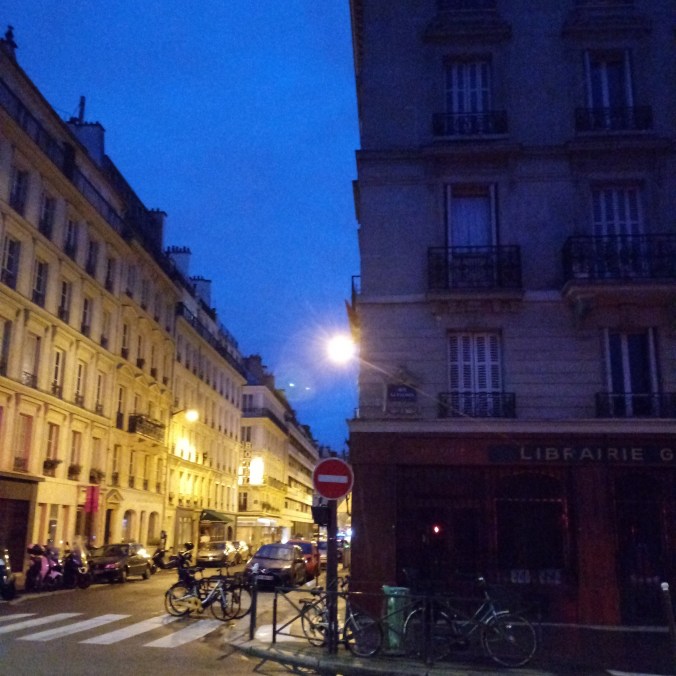
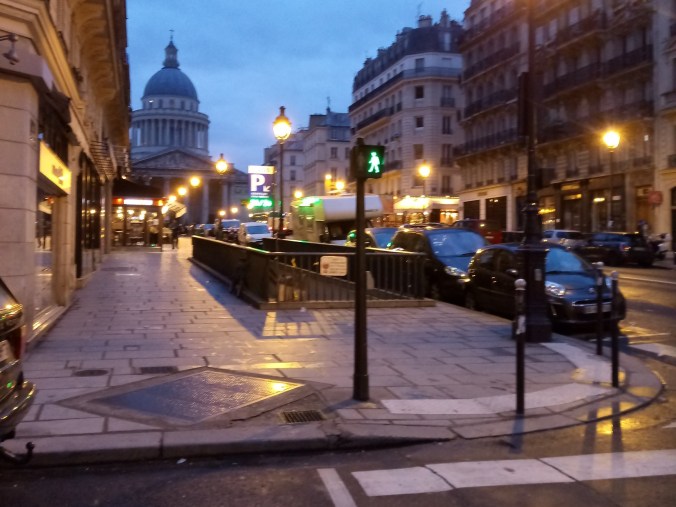
Tracing a route through the books and touching sometimes on the journeys Rhys herself took, I am mapping them through place and through a series of journeys, starting from London in Voyage in the Dark, to Paris in Quartet, the Paris and London of After Leaving Mr Mackenzie, and returning to Paris in Good Morning, Midnight.

What they call an impasse

A cheap hotel in Paris. Hotel rooms often figure in Jean Rhys books, and this particular hotel is situated in an impasse, that most evocative of French place names. They can be found everywhere in Paris, and often they are named. Threaded through the book are some possibilities that might help me to pinpoint its location, and from the map I can identify a few lines which lead to nowhere, dead ends.