It is a book that rewards re-reading, one of those books in which you notice different things each time you read. Reminding me of a time when I sat down to write, with the book beside me, in the early mornings of a long dark winter. I would set an alarm for 5am and sit with a blanket around me, often lighting a candle, and write for an hour or two when daily life would start to intrude again; the rituals of getting ready for school and work. The flame of the candle was the space I was carving out for myself, and sometimes a glimmer of an idea would surface. Writing back through the lens of memories real and imagined, I started to realize that it was places I was seeking to capture in words, a particular kind of longing.
Author: Anna Evans
Featured

Passages: on the Rue des Thermopyles
Looking back along the cobbled lane there is a sense of green everywhere, hushed voices from the shared garden. The shade of trees and dappled sunlight, rooftops, and blue sky. Each glimpse is like framing a different fall of shadow and sunlight and sometimes the street seems to lengthen depending on the angle I look, as figures emerge and fade into the space of the passage and around corners. I want to notice every detail, to know the story behind every door.
Featured

Out of Place No.03: ‘Missing Person’ by Patrick Modiano
What is striking on reading Missing Person is the detailed geography of the city, and the number of references to street names and specific places. The city becomes a site of clues or signs to be followed like a trail. They provide something tangible. Signs that might point the way through the darkness of memory. ‘I use them to try to obtain reference points. Buildings bring back memories and the more precise the setting the better it suits my imagination.’ I couldn’t resist the urge to map this book, the specific locations contrast with the uncertainty and lack of solidity which are the overall effect of the book.
Out of Place No.02: ‘The Vagabond’ by Colette
Colette writes beautifully about the passing landscape, the feel of travel, and of letting go, of seeing the changing scenery unfold. There is real life and feeling to this writing: ‘Half asleep, like the sea, and yielding to the swaying of the train, I thought I was skimming the waves, so close at hand, with a swallow’s cutting flight.’
Featured

Out of Place No.01: ‘Housekeeping’ by Marilynne Robinson
Ruthie begins to find a greater awareness of fragility, of instability and impermanence. To stay still in the book, is to be caught up in the ordered time of the domestic. It can be a way to hold the past at a distance and keep out the ghosts of those who are absent or lost. For Ruthie and Sylvie, these fragments of memory threaten to overwhelm the present, and a life of drifting become a way of comprehending the ghosts of the past, of keeping them alive through movement.
The Mirror Image
When I read Rhys, I find the ring of truth and something I recognise - about what real experience feels like and the difficulties of communicating, that not everyone has the capacity to change things or to shape the world around them; that not everyone has the voice or the words.
Featured

Canal walk, reflections
The canal was always there in my memory. Sometimes a lonely desolate place, sometimes the sunny light feeling of walking along by the water. You could walk for miles of changing landscape, along its edges and lost waterways, crossing countryside and the hidden parts of the town. From the windows of a train travelling across the valley to Manchester. From the window of my school bus, as it wound its way through the outskirts of the town. Where the chimneys remain, when the clouds hang across the Colne Valley, the canal looks back at me.
La Violetera
The figure of the flower seller, crossing international boundaries, finds echoes in Rhys's story 'Outside the Machine' in which she writes about identity and inner division, and the sense of not belonging, with having no place. It is about a sense of precarity, and homelessness, of being outside. When asked why she is living in Paris, the character Inez says, 'No, I don't feel particularly at home. That's not why I like it.' And later in the story she thinks: 'Why must you always take it for granted that everybody has somewhere to get back to?'
Featured
The Singing and the Gold
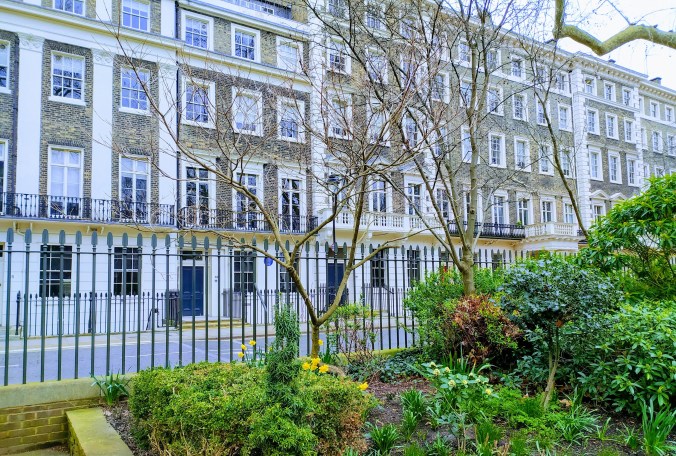
Petronella can be described as the archetypal Jean Rhys heroine. She navigates a position of uncertainty, living in a bedsit in Bloomsbury and working in shifting or temporary occupations, the artist's model, the chorus girl. She spends her days in aimless wandering and her nights in after hours bars and nightclubs. She fluctuates between the highs and lows of this transient lifestyle, and the financial insecurity and the tenuous identity of her status as a solitary female in the city: 'What's going to become of you, Miss Petronella Gray, living in a bed sitting room in Torrington Square, with no money, no background and no nous?'
Featured

Gloomy Sunday/Sombre Dimanche
There is something powerful and haunting about listening to this song, and it has a dark and mournful melody, particularly in the earliest versions. Lyrically poetic, it also contains a sense of its time, of the dread and uncertainty that shadowed the 1930s. The legends that have attached to the song, may also be present in each listen, and it is interesting to think about how popular songs might travel and adapt over time. Even without its notoriety, there is an atmosphere of sadness evoked by the song, and something compelling, something that is hard to shake.
 The Street Walks In