How few people understood what a tightrope she walked, or what would happen if she slipped. Jean Rhys
This is a piece I wrote inspired by Jean Rhys’s short story ‘Temps Perdi’ and music, memory and the theme of precarity that runs through her work.
Gently her fingers curl over the piano keys feeling out the notes. Applying pressure to the keys, anticipating the sound, growing, rolling back. The lift and fall of the keys, heavier each time than her fingers recall. The piano is out of tune.
The piano sounds, she looks for the word, cracked; it resists the insistent fingers, resists the labour in marking out a tune. And her fingers return, bringing a pattern to the notes, 1 2 3 … 1 2 3.
Flashes of other parts of the night, her first theatrical performance. Later that night, with shaking hands and beating heart, she writes down pages of the story that is spilling out, remembering how it played out to each passage of music.
The first dream of escape is running away to the circus.
There are crowds of people and the little girl holds her father’s hand tightly. The circus tent seems huge, constructed like the dome of a great cathedral. The lights are lit, bright and glaring lanterns suspended everywhere; they seem alive, great beacons of heat and danger, and the sound they make, crackling with anticipation. Impossible to imagine that all this could disappear, be taken down, packed away. It is the night outside that seems an illusion. Everything inside the tent is present. The memory blurs, a host of different acts whirl by, music and applause. The hush of the audience, and then the memory crystallizes around the final act, the trapeze, the stars of the show. Suspense, the drum roll, a sea of faces, looking upwards, high up to the furthest reaches of the tent, where the trapeze hangs, so high and frail.
‘Nina Rodriguez,’ she says the name out loud, ‘the Only Girl Who Works Without a Net.’
It is many years later that she writes it down. The simplicity of the notes, tapped out on the piano, bring back the music of Nina’s waltz until she is standing there, fragile yet strong and graceful. Lit up against the dark exterior of the tent, with the mechanism of the trapeze behind.
Then time slows down around the memory of Nina’s act. Standing in front of the trapeze, lovely Nina, the most beautiful girl, with dark eyes and golden curls; graceful in her leotard and tights, all black. Slowly, the girl climbs to the top of the trapeze and stands poised. She begins to move, on the swing, building momentum, higher and faster until she is really flying. In the moment of flight, of letting go, she becomes ethereal, a butterfly fluttering, at once trapped in the net and escaping.
Lost in each movement, until all is still and quiet: only she and the girl remain. The space around them narrows, they are suspended alone in time while the audience fades away.
Now that she is by herself, she turns to writing, and to memories; turns away from the books on the shelves. Life seems perilous, it has never settled into an easy-going regularity. Memory becomes a place to retreat, to enact the displacement of time and memory. Even though the days have become so still, when she writes she feels a sense of movement again. She can move in circles, to different times, different places; finding that so much remains. Trying to recall a song about the white cedar trees: how does it go? Here today and gone tomorrow… In the wild ruins of the Caribbean estate, flowers grow unchecked and butterflies flutter uninterrupted, and the white cedar trees still there. She writes it down, although it never leaves her, remembering the fragile white flowers so light that they fell and were blown away by the first wind that came.
All those years later thinking about what life might be like for the girl, trapped up there in that movement, bound to keep repeating the same tricks over and over, as if caught in a spell. Thinking about her smile, about the chains that bind and hold her.
As the song drifts and makes its way, back into the past, becoming dated and forgotten; she remembers other songs, other places. It is a familiar game, thinking back through the music that has patterned her life, trying to remember the words of the old songs. Sometimes they arrive unbidden. Memories in the lyrics, the notes, of a passage of music. Tiny glimpses of places… of Brussels, of Vienna, of Paris. She imagines trains thundering across Europe.
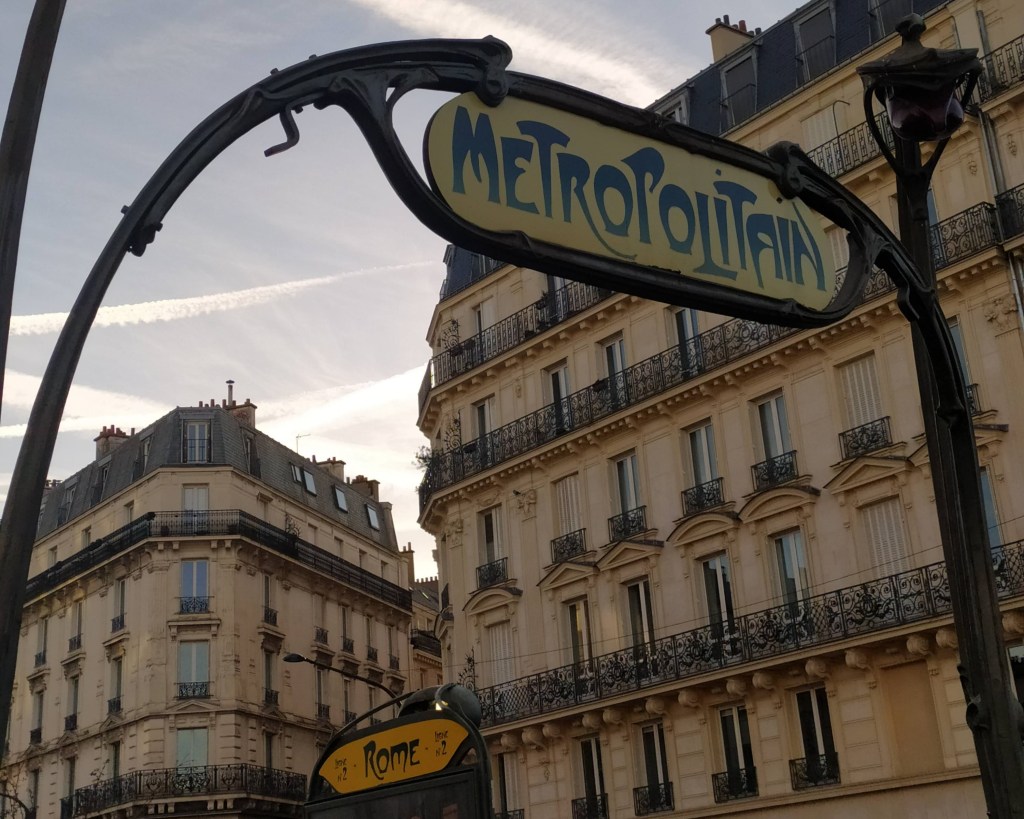
In Paris she turns to writing, uncovering the notebooks she has carried with her, from place to place. She thinks of herself as a vagabond wandering the city and straying into unknown quarters. A lack of solidity and permanence. The people they meet are dancers, singers, performers. Closing the curtains in the afternoon, going out to greet the dusk. In the nightclub, watching the dancer, fragile and exquisite, a butterfly fluttering in sunlight, captured. The sound of the violin playing, the music that has water running through it. From the balcony she can see the lights of the city, high in the rooftops of Paris.
She exists in the moment, but when things fall away, what is left? The other side of uncertainty is fear. Reflections in the rain, a dreamlike unreality. The light flickers, an illusion of freedom. Waking in the night and feeling the shadows moving. The night and its dreams of free-fall. Her heart is exposed, encircled all at once.
Anxiety grips her heart, of living with nothing, no money. What it means to live hand to mouth, without a safety net. What it means to be safe, and what it means to be free. The fear which has always been there, at the back of everything, that touches everything and trying to find the words for this fear: like looking over the edge of the world.
From loss comes writing, new beginnings and endings; suspending fragments over empty spaces. Walking the streets alone, with her memories for company. Writing is like walking the tightrope into the unknown … the bridge across the precipice.
Like a tightrope walker, that sense of risk, of balance and perfect timing. She knows that half the art comes from embracing risk, from making it look as though you know what you are doing. It is performance, illusion, the courage to walk gracefully, while looking over the precipice. There must always be that moment, of looking out into the abyss, of testing the strength and the tautness of the wire. To be completely focused on where you are and at the same time to let go of everything. Once you are high above, equidistant to both ends of the rope, then you can feel free. The tightrope-like character of human existence, awareness and art. A balancing act. In its flight and vision, the tightrope encapsulates the present moment, a single moment.
What was that moment, she tries to describe it, to put it into words. A sense of division, of being separated from herself, as though looking down from a great height. And weightlessness, a lack of solid ground.
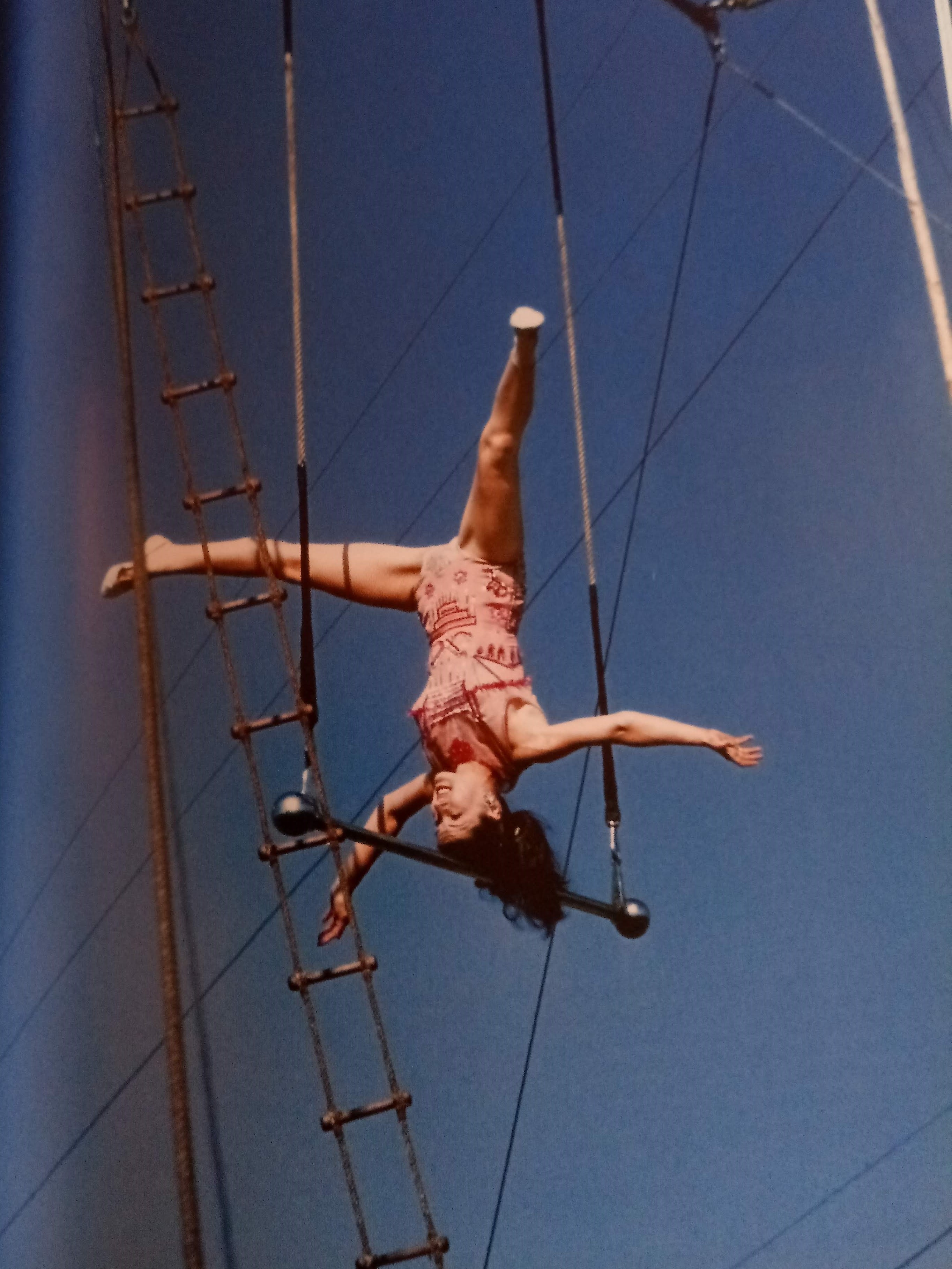
Like a lifeline, writing returns; it threads a path back. It is both a torment and the way ahead, her fate, her destiny, which appeared to wait around each corner. Living moment by moment, in the pendulum swing, an exalted feeling, this tension between safety and freedom, like the movement of the trapeze with its fluctuating highs and lows, opening and closing; movement and stasis.
She is drawn back to Nina, to the circus, thinking about the absence of home, about the unsettled and untethered, those who belong nowhere. Those who are invisible, who are outside the narrative, pass through her books, her cities. The movement of the trapeze becoming part of her writing. It is there in the movement of the streets, its graceful and daring swing through the air. The Only Girl Who Works Without a Net.
The music of the waltz; like so many other tunes it never left her. The music is like a spell, back to the moment, the memory constructed around Nina Rodriguez. If she could stay in the music, move across in time, find the scraps and traces and construct something around them. And so, she writes it out, the passage of time. Like figuring out the notes, the keys on the piano.
In the movement of the trapeze, tension, soaring, swinging upwards, higher. Leaving gravity behind. Weaving in and out as if caught in a web. In the moment of flight, in the urge to let go; in that moment she begins to understand. Only in learning about the fall comes awareness of what lies outside the net, of what it means to live without it.
 The Street Walks In